Sleeping in a Rorbu: What It Is, What It Costs, What to Check First
What is a rorbu?
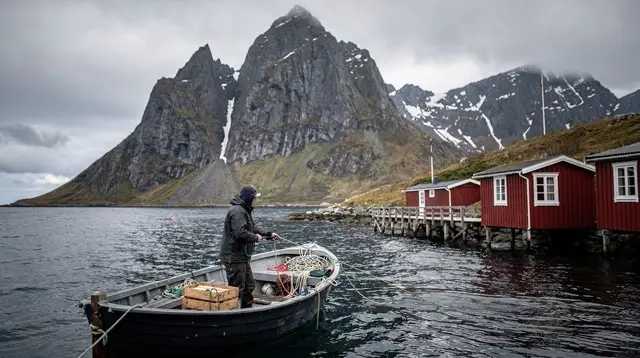
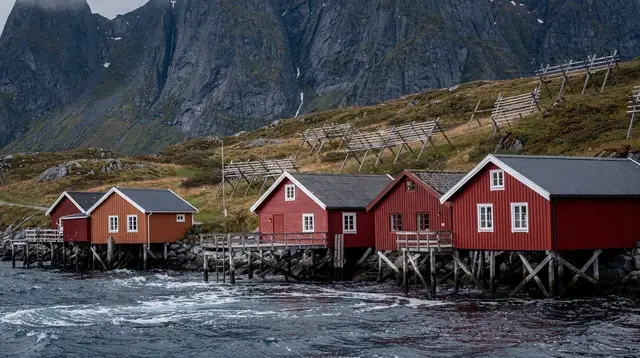
A rorbu is a traditional Lofoten fisherman's cabin, typically red, built on pilotis over or beside the water. Originally seasonal shelter for fishermen during the cod season, many have since been converted into tourist accommodation, ranging from restored original buildings to newer structures built in the same style.
From fishermen’s shelter to guest room
The rorbu started as a practical necessity, not a design choice. During the cod-fishing season, historically January through April, fishermen from across Norway traveled to Lofoten to work the skrei run, and needed somewhere to sleep near the boats. Rorbuer were built cheaply, on pilotis at the water’s edge, close enough to the harbor to make the daily walk to the boats short. They were shelter for a working season, not a home, and the construction reflects that: simple, functional, red-painted like most Norwegian wooden buildings of the period.
What’s changed is the use, not always the buildings themselves. As Lofoten’s fishing industry modernized and needed fewer beds for seasonal workers, many rorbuer were converted into tourist accommodation instead of falling into disrepair. Some of what you can book today are genuinely old structures, refitted with modern plumbing and insulation but standing on their original footprint. Others are newer buildings, constructed to resemble the traditional form without being an actual historic rorbu. Both are marketed under the same word, which is the first thing worth understanding before you book.
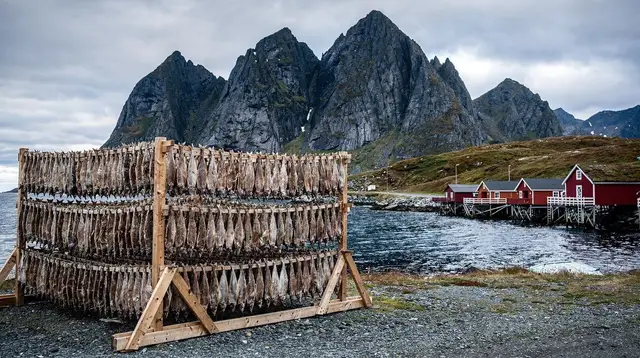
The buildings themselves follow a simple, functional plan that hasn’t changed much regardless of era: a single or double room raised on wooden piles directly over the water or along the shoreline, a steep-pitched roof to shed snow and rain, and red-painted timber cladding, the same paint used across Norwegian fishing settlements for centuries. Many original rorbuer sat within sight of a hjell — the wooden A-frame racks used to dry the skrei catch into stockfish — since the whole point of the settlement was proximity between sleeping, fishing, and processing. That layout is part of why a rorbu stay in a working harbor like Ballstad or Stamsund can still put you within view of active drying racks during the January to April season, in a way a hotel set back from the water usually can’t.
What to check before booking
- Whether it’s an original building or a new one built in the style. Both are valid options, but if the history matters to you, ask directly or look for specifics in the listing rather than assuming from photos — a well-built new rorbu can look identical to an old one in a picture.
- Distance to the water and to the harbor. Part of the appeal is proximity to the working port — some newer developments use the rorbu name more loosely for buildings set back from any harbor at all.
- Insulation and heating for the season you’re visiting. A rorbu built or converted with winter tourism in mind should have proper heating; an older, more basic conversion might not be set up for a comfortable stay in the coldest months. This matters more than most other factors if you’re visiting outside summer.
- What’s actually included. Kitchen facilities, linens, and towels vary by property — some rorbu stays are closer to a fully-equipped apartment, others closer to a basic cabin. Confirm this rather than assuming a standard.
- Which village you’re actually in. Rorbu stays are available across the archipelago, from busier bases like Reine and Svolvær to quieter working harbors like Stamsund, Ballstad, and Henningsvær. The village you choose affects your daily logistics as much as the room itself — see our where to stay guide and first-time visitor guide for how the main bases compare.
- Noise and activity levels around the harbor. A working port like Ballstad or Stamsund means early boat traffic, particularly during the January to April skrei season; a quieter, more tourism-oriented harbor may be calmer but further from an active fishing scene if that’s part of what you’re after.
- Parking arrangements. Dedicated space beside the cabin isn’t universal — some clusters require parking a short walk away, which matters more with a full car and cold, dark evenings.
- Cancellation and rebooking terms. Given how much weather can affect a Lofoten trip, understanding a property’s flexibility before committing is worth the extra few minutes it takes to check.
What a rorbu stay feels like day to day
Beyond the historical framing, a rorbu stay has a few practical characteristics worth knowing before you arrive. Being built on pilotis over or beside the water means you’re closer to harbor sound and activity than in a set-back hotel — boat engines starting early, gulls, the general rhythm of a working port if the village still has an active fleet. For some visitors that’s exactly the appeal; for light sleepers used to a quieter room, it’s worth knowing in advance rather than discovering on the first night.
Many rorbuer, whether original conversions or newer builds in the same style, use compact layouts with steep internal stairs rather than a single level, since the traditional footprint was never designed with modern accessibility in mind. This matters for anyone traveling with mobility limitations, young children needing supervision on stairs, or simply a lot of luggage — it’s worth asking directly whether a specific property has a ground-level layout if that matters to your group.
Parking is another detail that varies more than you’d expect. Some rorbu clusters have dedicated spaces close to each cabin; others, particularly in denser harbor areas, require parking a short walk away. Given how central a rental car is to most Lofoten itineraries, confirming parking arrangements before booking avoids an unwelcome surprise on arrival with a full car.
Rorbu stays across the seasons
A rorbu stay changes meaningfully with the season, more so than a standard hotel room might. In winter, roughly through the polar night and the following weeks of returning light, being right on the water can be a genuine advantage for aurora viewing — a clear, dark sky reflected on calm harbor water is one of the more striking versions of the northern lights, and it’s possible to catch a glimpse without leaving the cabin’s doorstep on a lucky night, though nothing about that is guaranteed given how much aurora visibility depends on both a dark sky and clear conditions at the same time.
Summer flips the experience. During the midnight sun weeks, roughly late May through mid-July, a harbor-side rorbu means genuine daylight at any hour, which some visitors find disorienting for sleep and others treat as a chance to explore at unusual hours with nobody else around. Blackout curtains or an eye mask are worth packing specifically for a rorbu stay during this window, since older buildings in particular weren’t designed with the concept of needing to sleep through daylight in mind.
Outside those two extremes — the shoulder seasons of spring and autumn — a rorbu stay is closer to what the word suggests without either the total darkness or total light, and is also when demand and pricing tend to ease compared with the peak summer and best-known aurora weeks.
Choosing a village for your rorbu stay
The village decision matters as much as the cabin itself. A rorbu in Reine or Hamnøy puts you in the most photographed corner of the archipelago, with more restaurants, services, and fellow travelers nearby, but also the highest demand and, generally, the highest prices for a comparable stay. A rorbu in a working port like Ballstad or Stamsund trades some of that convenience for a quieter, more functional setting closer to an active fishing economy rather than a curated one.
Henningsvær, split across its own small islands, sits somewhere between the two — enough infrastructure for a comfortable stay, without quite the volume of Reine in peak season. None of these are wrong choices; the right one depends on whether you’re prioritizing proximity to well-known sights, a quieter working-harbor atmosphere, or a central base for driving the rest of the E10 each day. Our getting around Lofoten guide covers how much daily driving each choice adds to your itinerary.
What it costs
Rorbu prices vary considerably by village, season, and whether you’re booking an original building or a newer replica, and we won’t invent a specific nightly rate here since it moves with demand and time of year. What’s consistent is that rorbuer generally sit in the mid-range to higher end of Lofoten’s accommodation options rather than the cheapest tier — camping and hostel-style stays undercut them on cost, at the expense of the private-cabin experience. For the wider cost picture, our Lofoten trip cost guide breaks down a rough daily budget by travel style: about 980 NOK per person for a bare-bones day, up to roughly 3,190 NOK for a mid-range day, and higher again for premium stays and activities. Rorbu accommodation in busier villages like Reine tends to sit toward the higher end of that range; quieter harbors like Stamsund or Ballstad are generally more affordable for a comparable stay.
Rorbu, cabin, or camping: how to decide
| Option | Typical cost tier | What you get |
|---|---|---|
| Rorbu (original or replica) | Mid to higher | Private cabin, often near the harbor, red-painted, on or near the water |
| Standard cabin or apartment rental | Mid | Comparable privacy, often set back from the harbor |
| Camping | Lowest | Lowest cost, most flexible, weather-dependent comfort |
See our camping guide and budget travel guide for the lower end of this range if a rorbu stay doesn’t fit your trip budget.
Booking channels and what to verify
Rorbuer are listed across the usual booking platforms alongside standard hotels and cabins, which is part of why the original-versus-replica distinction can get lost — a listing photographed well doesn’t announce which category it falls into. Reading the property description closely, checking for specific mention of the building’s age or history, and, where in doubt, messaging the host directly are all more reliable than judging from photos alone.
It’s also worth checking whether a listing includes linens, towels, and basic kitchen supplies as standard, or as an add-on, since this varies enough between properties that assuming one way or the other can leave you either overpaying for included items you don’t need or arriving without something you assumed would be there. None of this is unique to rorbuer specifically, but it matters more here than for a standard hotel room precisely because the category covers such a wide range of actual buildings and service levels under one traditional-sounding name.
Making the most of a harbor-side stay
Part of what makes a rorbu stay worthwhile is the setting rather than the room itself — waking up beside a working or former fishing harbor is a different experience than a standard hotel. If you want to get onto the water during your stay rather than just look at it from the cabin, a 3-hour guided kayak tour from Reine or an afternoon guided kayak tour are both reasonable ways to spend part of a rorbu stay actively rather than passively. For something closer to the fishing history the rorbu itself represents, a boat fishing trip with a local guide puts you on a working boat rather than a kayak, which is a more direct link to what these cabins were originally built to support.
If you’d rather stay on land, a guided hike from Svolvær that includes snacks is a lower-key option for a day built around your rorbu stay rather than a longer excursion elsewhere.
Booking timing
Popular villages — Reine and Svolvær in particular — see rorbu availability tighten well ahead of peak summer months and around the aurora season’s better-known weeks. If your dates are fixed and you have a specific village in mind, booking further ahead than you might for a standard hotel room is generally the safer approach, particularly for stays with direct water access. See our Lofoten trip cost guide and food in Lofoten guide for how a rorbu stay fits into the rest of a daily budget.
Rorbu questions answered
Is a rorbu always right on the water?
Traditionally, yes — that proximity to the harbor was the entire point. Modern usage of the term has loosened somewhat, so it’s worth confirming a specific property’s actual location rather than assuming waterfront access from the name alone.
Are rorbuer heated properly for a winter stay?
This varies by property. Rorbuer built or renovated with winter tourism in mind are generally well-insulated and heated; older, more basic conversions may not be. Confirm heating specifics if you’re visiting outside the summer months.
Do rorbuer have kitchens?
Many do, ranging from a basic kitchenette to a fully equipped kitchen, but this isn’t universal. Check the specific listing rather than assuming, especially if self-catering is part of your budget plan.
Is a rorbu more expensive than a hotel room?
Generally rorbuer sit in the mid-range to higher tier of Lofoten accommodation, comparable to or above a standard hotel room, though this varies by village and season. Camping and hostel-style options undercut both on price.
How far in advance should I book a rorbu?
For popular villages during peak summer or the better-known aurora season weeks, booking well ahead is advisable, since availability in the most in-demand harbors tightens noticeably compared to quieter villages.
Can I tell from photos whether a rorbu is original or newly built?
Not reliably. A well-constructed newer building in the traditional style can look identical to an original rorbu in listing photos. If the distinction matters to you, ask directly or look for specific details in the property description.
Fishing village tours on GetYourGuide
Verified deep-linked GetYourGuide tours. Book through these links and we earn a small commission at no cost to you.
Photos show the destination, not the operator's own images.