How the Fisherman's Shed Became Lofoten's Most Sought-After Place to Sleep
The Cabin I Almost Didn’t Book
I nearly skipped the rorbu on my first trip here. It read, on the booking page, like a novelty — a red wooden cabin on stilts over the water, priced at the upper end of what I’d budgeted for a single night — and I told myself a regular guesthouse in Svolvær would do the job for less. I booked it anyway, mostly out of curiosity about what I was actually paying for. By the second night, lying awake listening to water move under the floorboards, I understood the appeal in a way no description had managed to convey. It wasn’t the design. It was the fact that I was sleeping in a building that used to mean something completely different.
What a Rorbu Actually Was
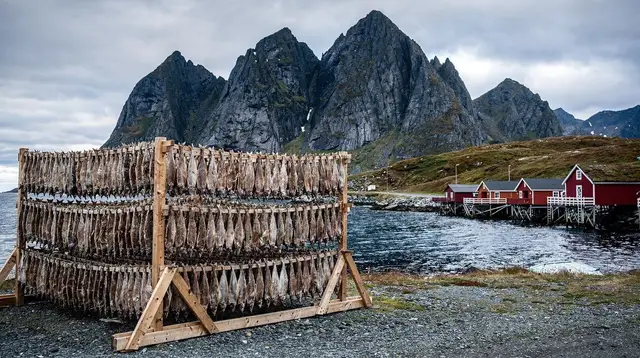
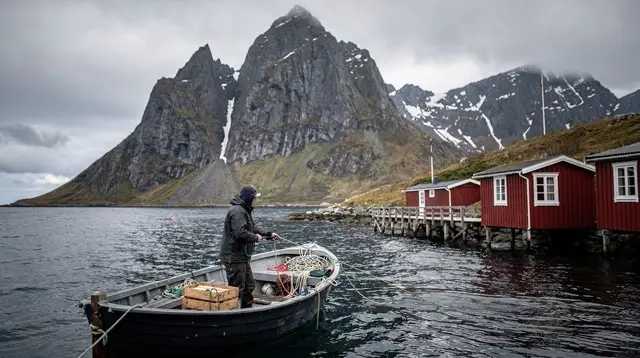
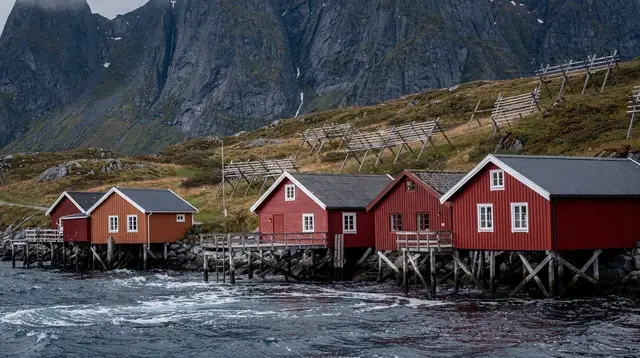
The word rorbu comes from ro, to row, and bu, a small dwelling — a shed for rowers, in the plainest possible translation. These were basic fishermen’s cabins, built out over the water on pilings so boats could tie up directly beneath or beside them, used seasonally by fishermen who came to Lofoten from elsewhere along the Norwegian coast to work the skrei season between January and April. They weren’t designed for comfort. They were designed to put a bunk and a stove within a short walk of a boat, for men who were here to work through some of the harshest months of the year and go home again once the season ended.
That original function shaped everything about how they look today: the red paint, the stilts, the low-slung profile hugging the shoreline rather than standing apart from it. None of that was aesthetic in origin. It was practical, built by and for people who needed shelter near the water more than they needed anything else, in villages like Ballstad and around Reine that were built entirely around the fishing calendar.
When the Fishermen Stopped Needing Them
The shift didn’t happen all at once. As the fishery modernized — fewer seasonal workers, better transport, changing patterns in how and where the catch was processed — a lot of these cabins simply stopped being used for their original purpose. Some fell into disrepair. Others sat empty for stretches of the year with no obvious future. What changed their fate wasn’t restoration for its own sake; it was tourism arriving in the archipelago and needing somewhere to put visitors that wasn’t a standard hotel room.
Villages that already had a stock of rorbuer sitting empty for parts of the year had, without planning for it, exactly the kind of distinctive accommodation that a growing number of visitors wanted. Sakrisøy, known today for its cluster of yellow rorbuer rather than red ones, and Hamnøy, the small islet connected by bridge, both leaned into this shift more visibly than most. What had been functional, unglamorous seasonal housing for fishermen became, within a couple of generations, some of the most photographed and most booked accommodation in the region.
Staying in One Today
The rorbu I stayed in had obviously been renovated — insulated properly, plumbed, wired for the twenty-first century — but it kept the shape and the low ceilings of the original structure, and the water was still directly beneath part of the floor. That detail matters more than any interior design choice. You’re not staying in a building modeled on a fisherman’s shed; in the older, more authentic examples, you’re staying in an actual one, repurposed rather than replicated.
Not every rorbu on the market today is a genuine converted original — some newer builds borrow the name and the general form without the history behind them — and it’s worth knowing the difference if that history is part of what you’re paying for. The rorbu guide goes into more detail on how to tell one from the other and what to expect from each, and where to stay in Lofoten covers how rorbuer compare to guesthouses, hotels, and camping options if you’re weighing the cost against a more standard room. Because this is genuinely one of the more expensive ways to sleep in an already expensive destination, it’s also worth reading what a Lofoten trip costs before assuming a rorbu fits comfortably into a tight budget.
What Made It Worth It, for Me
The specific evening that changed my mind about the extra cost wasn’t dramatic. It was quiet, close to the water, in a building that had clearly done real work for a long time before I ever booked it. If you’re staying somewhere similar and want to make an evening of it rather than just sleeping there, a guided tour that pairs the search for the northern lights with some local food and drink is a reasonable way to extend the night rather than sitting inside once it gets dark:
an evening tour that combines the hunt for the northern lights with local snacks and drinksIf your stay falls during the aurora season, roughly September through early April, and the sky looks like it might cooperate, a dedicated hunting tour that ranges further than you’d manage on your own is worth booking directly from wherever you’re staying:
a dedicated aurora-hunting tour from Svolvær that searches a wider area for clear skyIf you’re here instead during the warmer months, the same waterfront setting that makes a rorbu appealing at night also puts you close to boat-based activities during the day — a snorkeling trip among grey seals is a genuinely different way to spend an afternoon than anything the cabin itself offers:
a summer snorkeling trip to see grey seals in their natural habitatWhy It Still Feels Different From a Hotel Room
I’ve stayed in plenty of well-designed accommodation that borrows a coastal aesthetic without any of the history behind it, and it never quite lands the same way. A rorbu that’s genuinely a converted fisherman’s cabin carries something a themed hotel room can’t manufacture — the low doorway sized for a working fisherman rather than a design brief, the proximity to water that was about function long before it was about a view. Villages like Nusfjord on Flakstadøya, preserved close to its working condition, make that history easier to see even outside the cabin itself. If you’re planning a trip and deciding where to sleep, it’s worth treating the rorbu not as a themed upgrade but as a piece of the fishing economy that built this coastline, still doing a version of its original job: putting a roof over someone’s head, close to the water, in one of the harder places in Europe to make a living.
For a broader sense of that working history beyond just where you sleep, fishing villages of Lofoten is a useful companion piece, and camping in Lofoten covers the other end of the accommodation spectrum if a rorbu’s price tag doesn’t fit your trip.
Fishing village tours on GetYourGuide
Verified deep-linked GetYourGuide tours. Book through these links and we earn a small commission at no cost to you.
Photos show the destination, not the operator's own images.