Værøy and Røst: The Islands Most Lofoten Visitors Never See
Where the Road Actually Ends
Most people’s Lofoten trip ends at Å i Lofoten, the small village that marks the literal end of the E10, and I understand why. There’s a real sense of arrival at Å — a fishing village museum, the road simply stopping, nowhere further to drive. I stood there on my first visit and felt like I’d reached the edge of something. It took a second trip to learn that the archipelago actually keeps going past that point, just not by road. Værøy and Røst sit further out into the open Norwegian Sea, reachable only by boat, and almost nobody who drives the E10 to its endpoint continues on to see them.
Deciding to Keep Going
I’d read about the two islands mostly in passing — seabird colonies, puffins, a quieter version of the fishing culture that defines the rest of Lofoten — and I’ll admit the deciding factor wasn’t research so much as curiosity about what was actually out there once the road ran out. Getting to either island means a ferry crossing from Moskenes or from Bodø, and it’s a genuine commitment rather than a quick add-on to an afternoon — this isn’t a detour you fit in on your way to somewhere else, it’s a destination you plan a day, or more, around. The Bodø-Moskenes ferry is the connection most visitors already know for reaching the main archipelago, and the same terminal is where a crossing onward to Værøy or Røst needs to be arranged separately.
Standing on the ferry deck watching the main islands recede and the open sea take over, I understood immediately why so few people make this trip. It requires giving up a day that could otherwise go toward Reine, or Henningsvær, or one of the hikes closer to the main road — all of which are, on their own terms, worth the time. Værøy and Røst ask you to trade a known quantity for something you can’t easily picture until you’ve actually arrived.
What’s Actually Out There
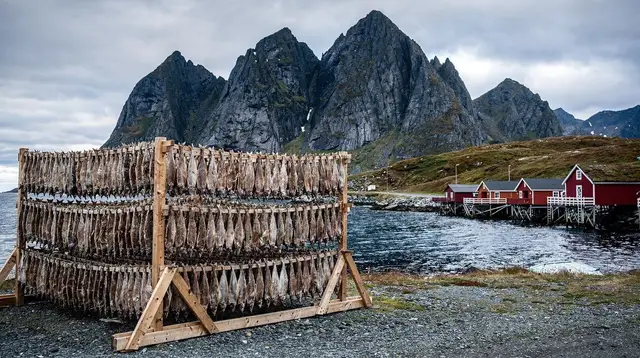
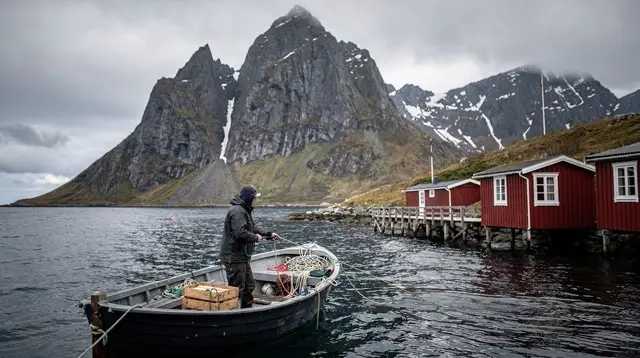
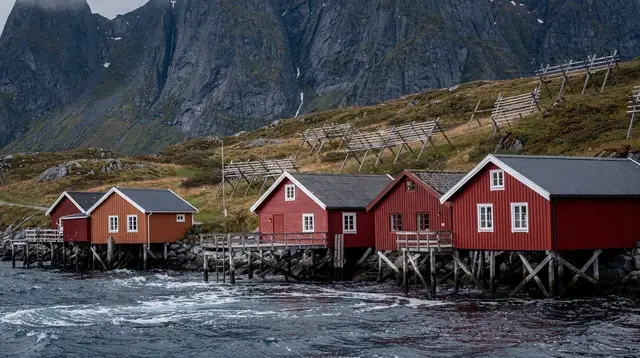
Neither island is large, and neither is set up as a tourist destination in the way Reine or Henningsvær are. What they have instead is scale of a different kind: enormous seabird colonies, with puffins among the more recognizable residents, nesting on cliffs that face directly into open ocean rather than into a sheltered fjord. The fishing villages here felt, walking through them, closer to what I imagine the larger Lofoten villages were before tourism became part of their economy — working harbors, quiet streets, a sense that whatever’s happening here isn’t happening for visitors.
I didn’t see another traveler with a camera the entire time I was on Værøy, which after a week spent around Reine and Hamnøy — beautiful, but not exactly solitary — was its own kind of striking. The quiet wasn’t staged. It’s just what these islands are like, day to day, for people who live somewhere considerably further from the mainland than most of Lofoten already is.
The Birds Are the Reason to Come
If there’s a single practical reason to make this trip, it’s the seabirds. The colonies on the cliffs here are a different scale of wildlife experience than anything closer to the main road, and the puffins in particular draw the attention, arriving in numbers that make the cliffs themselves look like they’re moving. I’m not a birder by habit, but I stood on a headland longer than I’d planned to, just watching the traffic in and out of the nesting sites. Puffins and seabirds covers the broader picture of where and when to see this kind of colony across the region, and wildlife in Lofoten is worth reading before you commit to the crossing, since the birds are genuinely the draw here more than any single village or viewpoint.
Getting out on the water near these islands, rather than just watching from the cliffs, adds another layer — a boat trip that spends time looking for sea eagles put me close enough to the coastline to see how the birds actually work the cliffs from below, not just above:
a boat safari along the coast that watches for sea eagles among the cliffsA Different Kind of Solitude
I went out again in summer on a different trip and tried snorkeling near the islands, which turned the same water I’d only looked at from a boat into something I was actually in. Grey seals are a regular presence in these waters, and seeing one at close range from underwater is a different register of encounter than the usual glimpse from a boat rail:
a summer snorkeling trip to see grey seals in their natural habitatWinter changes the character of a visit here considerably — the crossing itself becomes more weather-dependent, and the islands’ isolation, already considerable, becomes more pronounced with shorter days. If your schedule brings you out this way during aurora season, the near-total absence of artificial light on islands this remote is a real advantage for anyone hoping to see the sky do something, on a night when it’s actually clear:
a guided evening tour tracking clear, dark sky for the northern lightsWhether It’s Worth the Day You’ll Spend
I wouldn’t tell every first-time visitor to prioritize Værøy and Røst over the villages along the E10 — for a first trip, the time is almost always better spent around Reine, Henningsvær, and the stretch of coast most people come here to see, and first time in Lofoten covers why that core route matters more on a debut visit than a detour this far out. But if you’ve already done that trip, or if the idea of standing somewhere genuinely past the edge of the well-worn route appeals to you more than another photograph of Reinebringen from the top, this is where that impulse leads.
The crossing takes real planning — checking ferry schedules from Moskenes or Bodø well ahead of time, and building in slack for weather that can cancel a sailing outright — and fishing villages in Lofoten and day trips from Lofoten both cover the logistics of getting further afield if you decide it’s worth the extra day.
What stayed with me longest wasn’t a single view or a single bird. It was standing on Værøy’s harbor, looking back toward the main archipelago I’d just spent a week in, realizing how much of Lofoten’s identity as a remote, weather-beaten place had actually softened once tourism arrived along the E10 — and that this last stretch of islands hadn’t softened at all.
Fishing village tours on GetYourGuide
Verified deep-linked GetYourGuide tours. Book through these links and we earn a small commission at no cost to you.
Photos show the destination, not the operator's own images.