Puffins and Seabird Colonies: Bleik, Værøy, and Røst
Where can you see puffins near Lofoten?
The main puffin colonies are on Bleik island near Andenes in Vesterålen, and on Værøy and Røst south of the main Lofoten chain. All three are seasonal, with birds present roughly from spring through summer and largely gone by early autumn, and all are best visited by boat with a guide who keeps a respectful distance.
Puffins draw a specific kind of visitor to this part of Norway, one who’s often more interested in a single bird species than in the fjords and villages that fill most Lofoten itineraries. Three sites carry the region’s main colonies — Bleik, near Andenes in Vesterålen, and the more remote islands of Værøy and Røst south of the main Lofoten chain — and each has a different combination of season, access, and crowd.
Bleik: the closest colony to a real airport and town
Bleik sits on Andøya in Vesterålen, a long sandy beach with an offshore island that hosts one of the more accessible puffin colonies in the region. Its practical advantage over Værøy and Røst is straightforward: it’s close to Andenes, which has an airport and an established base of boat operators, most of whom built their business around whale watching rather than puffins specifically but now run combined trips or dedicated seabird routes during the season.
Because Bleik sits at the northern edge of Vesterålen rather than within the main Lofoten archipelago, it’s a genuine detour if you’re based further south — worth planning as part of a Vesterålen extension to a Lofoten trip rather than a quick add-on.
Værøy and Røst: further out, fewer visitors
South of the main Lofoten islands, Værøy and Røst host seabird colonies that see considerably fewer visitors than Bleik, largely because reaching them takes more effort — they sit further from the main road network and are typically reached by boat or a longer ferry connection rather than a short drive. That distance is also their appeal: colonies here tend to feel less managed for tourism and more like a working seabird cliff that visitors are permitted to view under guidance, rather than a purpose-built viewing platform.
If your Lofoten time is limited, Værøy and Røst are usually a deliberate extra leg rather than something you fit in alongside Reine or Henningsvær. They reward visitors who specifically want the seabirds and are willing to build a day or more around reaching them, rather than visitors looking for an easy add-on to a standard road-trip itinerary.
Season: when the birds are actually there
Puffins spend most of the year out at sea, far from land, and only come ashore to breed. In this part of Norway, that means the colonies are meaningfully populated only for a window roughly spanning spring through summer; outside that period, a trip to any of these three sites is unlikely to produce a puffin sighting at all, whatever else it might offer in terms of scenery or other birdlife. If a puffin sighting is the specific goal of your trip, plan the visit inside that window rather than around Lofoten’s broader travel season, which runs on a different logic tied to daylight, weather, and the northern lights instead.
As with everything outdoors in this region, weather can change within an hour, and boat access to island colonies is the first thing affected by rough seas — a scheduled trip can be postponed or rerouted at short notice, so build flexibility into any itinerary centered on seeing the birds.
Telling puffins from the other cliff-nesting birds
Colonies at Bleik, Værøy, and Røst rarely host puffins alone, and it helps to know what else you’re likely to be looking at so a distant silhouette doesn’t get mistaken for the bird you came to see. Puffins are small, compact, and fly with fast, whirring wingbeats low over the water, usually in short, direct bursts between the sea and a burrow on the clifftop rather than the long soaring glides other seabirds use. Their stocky build and the pattern around the head and bill are usually enough to pick them out at a reasonable distance, even without binoculars, once you’ve seen a few go past.
Kittiwakes and guillemots share the same cliffs in large numbers and are the birds most likely to be confused with puffins from a moving boat — both nest on narrow ledges in dense, noisy colonies, and both are considerably more numerous at these sites than puffins themselves. A guide will usually point out the difference in real time, but it’s worth knowing beforehand that a colony that looks solid with birds from a distance may be mostly these other species, with puffins present in smaller numbers and often further along the same cliff face.
Photographing puffins without disturbing them
Puffins are a genuinely popular photography subject, and the same distance rules that apply to viewing apply doubly to photography, since the temptation to get closer for a better shot is exactly the behavior that causes disturbance. A longer lens is the practical answer rather than physical proximity — on a boat, this also compensates for the vessel’s own movement, which makes handheld shots at a long focal length harder than they look. Bright, overcast light is generally easier to work with here than direct sun, since it softens the contrast between a dark cliff face and pale seabirds without adding harsh shadow. Our broader photography guide for the region covers gear and settings that transfer well to this kind of moving-boat wildlife shooting, even though it isn’t puffin-specific.
Because a boat rarely sits still for long near an active colony, and shouldn’t for the birds’ sake, treat any outing as a chance to get a handful of good frames rather than an extended session at one spot. Guides generally allow a reasonable window near a colony before moving on, both to manage disturbance and because currents and other boat traffic make holding position difficult regardless.
Planning a puffin day: timing, tides, and what to bring
Morning departures tend to have calmer water than later in the day, particularly in summer when afternoon winds are more likely to pick up along this exposed coast — a practical reason to book an early slot if the operator offers a choice. Because access to these colonies is entirely boat-dependent, sea conditions on the day matter more than they would for a land-based sight, and a trip can be shortened, rerouted, or postponed if the forecast turns, in line with the weather-changes-in-an-hour rule that governs outdoor plans across this region.
Dress as you would for any open-water trip here regardless of the land forecast: a windproof, waterproof outer layer, something warm underneath even in summer, and a hat, since wind chill on a moving boat is consistently colder than the air temperature on shore would suggest. A dry bag or waterproof pouch for a phone or camera is worth carrying, since sea spray is a near-constant on an open boat approaching cliffs and skerries. Anyone prone to seasickness is better off taking precautions before boarding than after the boat is already underway near a colony.
Getting there and choosing an approach
a RIB boat seal and bird safari departing from Nyksund is one option for visitors based in Vesterålen who want a faster, more maneuverable boat than a larger tour vessel, useful for getting closer to cliffs and rocky islets without a long crossing.
For a broader look at Andøya’s coastline and wildlife beyond just the colony itself, a scenic-route format covers more ground:
a scenic wildlife tour along the Andøya route from Sortland combines driving and viewing stops across the island rather than a single fixed destination, which suits visitors who want context alongside the sighting itself.
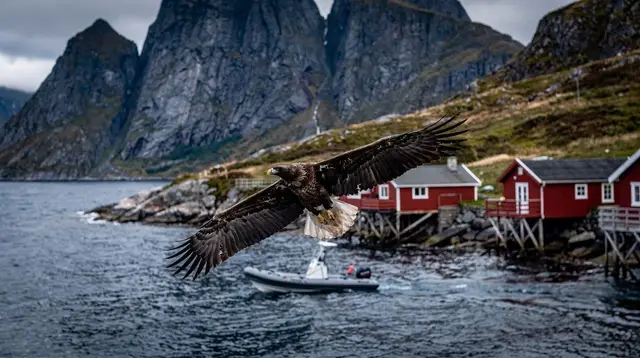
Visitors who want a broader mix of species on one outing — not just puffins, but the white-tailed eagles that share this coastline — have a wider-ranging option as well:
an eagle and wildlife safari by RIB boat across Vesterålen is built around exactly that combination, and it’s a reasonable choice if a single-species trip feels too narrow for your day.
Viewing ethics: what a responsible visit looks like
Seabird colonies are genuinely sensitive during the breeding season. A few practical rules apply across all three sites, and any reputable guide will already be enforcing them:
- Keep distance from nesting cliffs. Approaching too closely, on foot or by drone, can flush birds off nests, leaving eggs or chicks exposed to predators and weather.
- No drones near colonies. This is the single most common way visitors unintentionally disturb a breeding colony, and it’s worth avoiding even where it isn’t explicitly signposted.
- Follow your guide’s approach and timing. Boat operators working these waters regularly know which distances and angles keep a colony undisturbed while still giving visitors a clear view.
- Stay on marked paths where colonies are visible from land. Cutting across open ground near a cliff edge risks both disturbing birds and your own safety on uneven terrain.
- Treat a quiet day as normal, not a failure. Weather, tides, and the birds’ own unpredictable behavior mean a trip can come back with a distant or partial view rather than a close one — the same unpredictability that applies to any wildlife encounter in this region.
That last point is worth taking seriously. Wildlife tours anywhere make no guarantees, and a guided trip that returns without a close sighting isn’t evidence of a poorly run operation — it’s simply how wildlife works. Our notes on wildlife in Lofoten more broadly cover this same expectation-setting for other species.
Combining puffins with other Vesterålen wildlife
Because Bleik sits so close to Andenes, most visitors pair a puffin-focused trip with the area’s other major draw: whale watching. Sperm whales and other species are seen off Andøya on a fairly regular seasonal basis, and several operators run trips aimed primarily at whales that also pass near or through puffin territory:
a guided walking tour with a photo session around Andenes is a land-based alternative for visitors who’d rather combine coastal photography with wildlife spotting than commit to a full boat excursion.
For a fuller look at the whale side of a Vesterålen trip, see our guides to whale watching from Andenes and the whales of Vesterålen more generally — both worth reading before you commit a full day to either species, since the logistics (departure point, boat type, typical trip length) differ from a puffin-focused outing.
Practical notes
None of these trips are cheap by most travelers’ standards, in line with the region generally — a boat-based wildlife excursion sits toward the middle or upper end of a typical daily Lofoten and Vesterålen budget. Dress for open water regardless of the land forecast: even a mild, sunny day onshore can feel considerably colder once a boat is moving, and layers that work for a coastal walk near Sortland or Stokmarknes may not be enough once you’re out past the harbor.
Frequently asked questions about puffins near Lofoten
When is the best time to see puffins near Lofoten?
Roughly spring through summer, while the birds are on land to breed. Outside that window, most puffins are out at sea and effectively unseeable from shore or a coastal boat trip.
Where is the closest puffin colony to Andenes?
Bleik island, just off the coast near Andenes in Vesterålen, hosts one of the more accessible colonies in the region and is often combined with whale-watching trips departing from the same town.
Can you land on Værøy or Røst to see the puffins?
Access varies by site and season, and some colony areas restrict landing to protect nesting birds. A guided boat trip is the most reliable way to see the birds without needing to arrange landing permissions yourself.
Is it okay to use a drone near a puffin colony?
No. Seabird colonies are sensitive to disturbance during the breeding season, and flying a drone near nesting cliffs risks scattering birds off their nests, exposing eggs or chicks to predators and weather. Follow local guidance and your guide’s instructions.
Do I need a boat tour, or can I see puffins from land?
Some colonies are visible from shore at a distance, but a boat trip generally gets you closer, safely, without the disturbance that approaching nesting cliffs on foot can cause. It’s also often the only realistic way to reach island colonies like Værøy and Røst.
Are puffins the only seabirds worth watching for in this region?
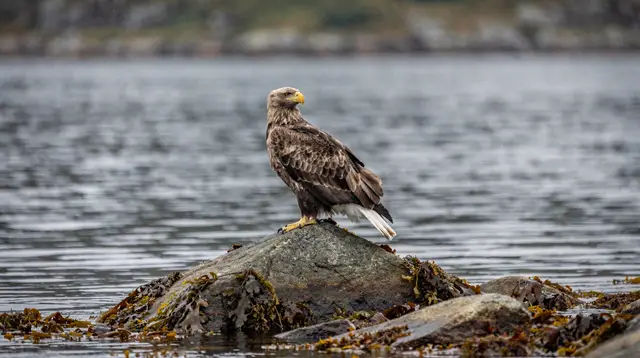
No. The same coastal cliffs and islands support other seabird species alongside puffins, and white-tailed eagles are a common sight along the same stretches of coast, sometimes on the same boat trip.
How close will a boat actually get to a puffin colony?
Close enough for a clear view without disturbing the birds, which in practice means the operator sets the distance rather than the passengers. Expect the boat to hold a position for a limited window near an active cliff before moving on, both for the colony’s sake and because currents and other traffic make sitting still for long difficult regardless.
Is seasickness a concern on a puffin boat trip?
It can be, since these routes run on open, sometimes rough water rather than a sheltered fjord. Anyone prone to motion sickness is better off taking precautions well before boarding, and a light meal beforehand tends to help more than heading out on an empty stomach.
Wildlife & nature tours on GetYourGuide
Verified deep-linked GetYourGuide tours. Book through these links and we earn a small commission at no cost to you.
Photos show the destination, not the operator's own images.