Whales of Vesterålen: Sperm Whales, Orcas, and Humpbacks
What whales can you see off Vesterålen, and when?
Sperm whales are the most consistent sighting, present off Andenes across spring, summer, and into autumn because deep water lies unusually close to shore here. Orcas and humpbacks are less predictable and tend to follow herring into the region's waters during the darker months, which makes them a winter possibility rather than a year-round one.
Three Different Whales, Three Different Reasons to Show Up
Ask about “whale watching in Vesterålen” and most answers collapse three separate stories into one. Sperm whales, orcas, and humpback whales don’t share a season, a reason for being in these waters, or an equal chance of being seen. Sperm whales turn up because the seafloor off Andenes drops away into deep water unusually close to the coast, giving them a year-round feeding ground within a manageable boat ride of shore. Orcas and humpbacks turn up because of herring — when the shoals move into the region’s waters to overwinter, the whales that feed on them follow, and that timing is set by the fish, not the calendar. Understanding which whale you’re likely to see, and why, matters more here than in most whale-watching destinations, because the difference changes what season you should actually book.
Sperm Whales: The Reliable Sighting
Sperm whales are the reason Andenes became a whale-watching town in the first place. They’re deep divers, hunting squid and fish far below the surface, and what makes the water off Andøya unusual is how close that deep water sits to land — a steep underwater drop-off within a comparatively short boat trip of the harbor, rather than a long crossing into open ocean. That geography is the single biggest reason whale-watching here has built a track record over decades, and it’s why sperm whales are treated as the anchor species for most trips departing Andenes rather than a hoped-for bonus.
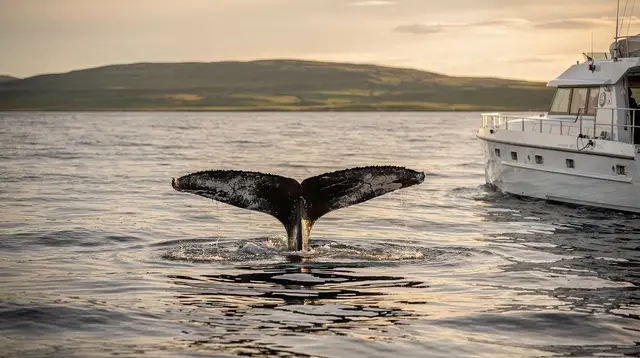
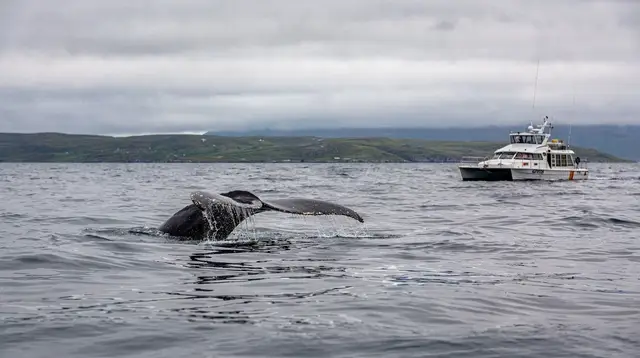
Sightings run across a long stretch of the year, broadly from spring through summer and into early autumn, when daylight is longest and sea conditions are generally more manageable. A whale-watching cruise from Andenes that includes entry to the whale center is built around this pattern — the boat searches the deep-water grounds for surfacing sperm whales, typically visible by their distinctive blow and the long, shallow dive sequence that ends with the tail rising clear of the water, and the paired whale center visit fills in the biology and history around what you’ve just seen.
For travelers who’d rather the search itself take priority over the added exhibits, a whale-watching trip on a classic catamaran run under responsible-viewing guidelines keeps a steadier distance from any whale found and a slower pace generally, which suits travelers who want the encounter managed conservatively rather than approached aggressively.
Orcas: Following the Herring
Orcas are a different story entirely. Unlike sperm whales, they aren’t residents of a fixed feeding ground off Andenes — they follow the herring that move into the wider region’s waters to spend the winter, and where exactly that happens shifts from year to year depending on where the herring settle. In years when herring concentrate in reach of Vesterålen’s waters, orca sightings become a realistic winter possibility; in years when the shoals settle elsewhere along the Norwegian coast, they don’t. This is the honest version of “orca season” here: it is real, but it is tied to a fish migration that isn’t fixed to a single bay the way the sperm whale grounds off Andenes are.
Practically, this means orca trips run in the darker months rather than summer, layering wildlife-watching on top of already short winter daylight and rougher seas. It’s a genuinely different kind of trip from a summer sperm whale cruise — colder, shorter days, less certainty — and travelers chasing orcas specifically should treat it as a chance worth taking rather than a guaranteed sighting to plan an entire trip around.
Humpback Whales: The Herring’s Other Guest
Humpback whales often show up in the same winter window as orcas, for the same underlying reason — herring draw in more than one predator at once, and boats searching for orcas in these months will just as often find humpbacks feeding nearby, sometimes both in view within the same outing. Humpbacks are easier to identify at a distance than orcas thanks to their size and the distinctive tail fluke they raise before a deep dive, but like orcas, their presence off Vesterålen depends on where the herring have settled that particular winter rather than a fixed annual pattern.
| Species | Typical season off Vesterålen | Why they’re here | Sighting reliability |
|---|---|---|---|
| Sperm whale | Spring through summer into early autumn | Deep water close to shore off Andenes, a year-round feeding ground | High during the main season |
| Orca | Darker months, roughly autumn into winter | Following herring overwintering in the region’s waters | Variable, depends on herring location that year |
| Humpback whale | Same winter window as orcas | Also feeding on overwintering herring | Variable, often sighted alongside orcas |
What a Trip Actually Looks Like
Whichever season you’re booking for, a whale-watching trip from Andenes means heading out onto the open Norwegian Sea rather than a sheltered fjord channel, which is a rougher, more exposed ride than boat trips departing from inside Lofoten’s protected waters further south. Boats typically motor out to the known grounds, then slow and search, watching for the blow of a surfacing whale before approaching at a controlled distance. None of this is instantaneous — patience is part of the trip, and a good crew reading the water matters as much as the whale being there at all.
Because conditions on this stretch of coast can shift within an hour regardless of season, dress for cold and spray even in midsummer, and expect operators to adjust timing or, occasionally, cancel outright for genuinely rough seas rather than pushing through unsafe conditions. The weather guide for Lofoten covers this pattern in more general terms; on the open water off Andøya, the same volatility applies with less shelter to soften it.
Other Wildlife Sharing These Waters
Whales aren’t the only reason to book a boat out of this stretch of coast. Seals haul out on rocks and skerries along the outer coastline near Nyksund and Stø, and seabird colonies nest on cliffs and islands within reach of the same waters. A RIB boat safari from Nyksund focused on seals and seabirds covers this side of the coast’s wildlife in a faster, more exposed boat than the whale-watching cruises, and it’s a reasonable pairing for travelers who want a fuller picture of the region’s marine life beyond whales alone. The guide to puffins and seabirds and the broader wildlife guide for the region cover what else nests and hauls out along this coast through the year.
Sea eagles hunt this coastline too, and RIB boat wildlife safaris that watch for eagles alongside seals and seabirds cover similar ground to the whale-watching routes, in a faster, more exposed boat better suited to a half day than a full one. The story of the region’s sea eagle population recovering over recent decades is covered in more detail in this account of their comeback, for anyone curious about how a species now this visible along the coast wasn’t always so easy to spot. Bleik, a short distance from Andenes, adds a seabird island to the same stretch of coast and is a reasonable stop to combine with a wildlife-focused day rather than a whale-only one.
Basing Yourself for a Whale-Watching Trip
Sortland works well as a base for reaching Andenes and the wider Vesterålen wildlife circuit, sitting closer to the region’s other stops than Andenes itself and offering more everyday infrastructure. Stokmarknes, further along the same stretch, is another possible stopover point if you’re moving through the region rather than basing in one place for several nights. Whichever you choose, Vesterålen sits far enough from the rest of Lofoten that reaching it deserves its own block of days rather than a rushed add-on; the 7-day Lofoten and Vesterålen itinerary is built specifically around giving both regions proper time, and the guide to getting to Lofoten and the airports guide cover how flights and the regional road network connect the two.
If a whale-watching trip is the centerpiece of a specific day, a guided scenic drive along the Andøya route watching for wildlife on the way is a reasonable way to fill the rest of that day, covering the open moorland and coastline between Sortland and Andenes with a driver rather than self-navigating unfamiliar roads on a day already built around a boat departure.
When It Doesn’t Work Out
Not every whale-watching trip finds its whale, and that’s worth saying plainly rather than glossing over. Sperm whale sightings are frequent enough during the main season that most trips succeed, but “most” isn’t “all,” and orca or humpback sightings in winter are genuinely less certain given how tied they are to herring location that particular year. One traveler’s account of a trip that came back without a sighting, in this piece on the whale that didn’t show, is worth reading before booking if you want a realistic sense of what an unsuccessful trip actually feels like, rather than only the version where everything goes to plan. Most operators offer some form of rebooking policy for exactly this reason, though the terms vary, so it’s worth checking before you commit to a single, non-refundable date.
Choosing Your Season
For most travelers, the practical decision comes down to this: come in the warmer months for the best odds of a sperm whale sighting, longer daylight, and calmer seas, or come in winter specifically for a chance — not a guarantee — at orcas and humpbacks, accepting shorter days and rougher water as the trade-off. Neither choice is wrong; they’re simply different trips built around different animals, and conflating them is the most common way travelers end up disappointed by a whale-watching booking made for the wrong season. If your main goal is the sperm whale encounter that Andenes is built around, the summer window remains the safer bet regardless of what else might be swimming through these waters in the months either side of it.
Reading the Day, Not Just the Season
Booking the right season narrows the odds in your favor, but it doesn’t settle the question on its own — within any given week of the right season, some days are simply better than others for actually finding and watching a whale. Sea state matters as much as the calendar: a flat, calm morning lets a crew spot a distant blow and a whale’s dive sequence far more easily than a choppy afternoon with whitecaps breaking up the same view, and operators routinely adjust departure times or, on the roughest days, cancel outright rather than run a trip in conditions where sightings and passenger comfort both suffer. Because conditions on this stretch of open coast can change within an hour regardless of forecast, a scheduled morning trip can look completely different by midday, which is one reason operators build some flexibility into departure windows rather than committing to a fixed hour days in advance.
That same volatility is worth planning around on the traveler’s side too, not just the operator’s. Building a buffer day or two into a Vesterålen visit — rather than treating the whale-watching trip as the single fixed appointment of a tightly scheduled itinerary — gives room to move the booking if the first available day turns out rough. This matters more here than it would for a sheltered fjord cruise further south in Lofoten, since Andenes faces open water with little to break the swell, and a cancelled or rescheduled departure is a normal part of the season rather than a sign of a badly run operation.
Seasickness is worth taking seriously before committing to a full day on this stretch of water, particularly for anyone without much boat experience. The same open exposure that makes conditions changeable also means the ride out to the deep-water grounds can involve real motion even on a moderate day, and dressing for cold and spray doesn’t do anything for a stomach unused to it. Travelers prone to motion sickness are generally better served preparing in advance — medication, eating lightly beforehand, staying on deck in the fresh air rather than below — than discovering the problem partway through a half-day trip with no way back to shore until the boat returns.
Whales of Vesterålen: Common Questions
Is Andenes better than other places in Norway for whale watching?
Andenes is unusual for having deep water this close to shore, which is what makes sperm whale sightings comparatively reliable here across a long season. Whether it’s “better” than other Norwegian whale-watching locations depends on which species you’re hoping to see and when you’re traveling.
Can I see both sperm whales and orcas on the same trip?
Not typically in a single outing, since they favor different seasons for different reasons. Sperm whales are the summer target; orcas belong to the winter herring season. Travelers wanting both generally need two separate visits.
How long does a whale-watching trip from Andenes usually take?
Expect a half day at minimum, since boats need time to reach the deep-water grounds, search, and return. Exact durations vary by operator and trip type.
What should I wear on a whale-watching boat?
Warm layers under a windproof, waterproof outer shell, plus a hat and gloves, regardless of season — the open Norwegian Sea off Andøya is colder and rougher than sheltered fjord water, and wind chill on deck is considerably harsher than the air temperature on land.
Is winter whale watching worth the shorter daylight?
Only if seeing an orca or humpback specifically matters more to you than comfort and certainty. If a reliable sighting matters more, the summer sperm whale season is the safer choice.
Do sperm whales stay in the same spot year-round?
They favor the deep water off Andenes across a long season because it’s a reliable feeding ground, but “resident” doesn’t mean fixed to one exact spot — boats still need to search rather than motor straight to a known location every time.
Whale watching tours on GetYourGuide
Verified deep-linked GetYourGuide tours. Book through these links and we earn a small commission at no cost to you.
Photos show the destination, not the operator's own images.