Whale Watching in Andenes: Species, Season, and Seasickness
What's the best time of year to see whales at Andenes?
Sperm whales are found in the deep waters off Andenes for much of the year, since males feed there regularly, while other species appear more seasonally. No cruise can guarantee a sighting on a specific day, since this is wildlife in open ocean, not a managed attraction.
Why whales show up here at all
Andenes, at the northern tip of Andøya in Vesterålen, sits close to unusually deep water for a coastal location — a submarine trench runs near the shoreline, which is why whales, and sperm whales in particular, are found here in numbers not typical of shallower coastal waters elsewhere. That geography, more than anything else, is why whale-watching operations concentrated here rather than somewhere closer to the main Lofoten islands further south.
What you might see, and when
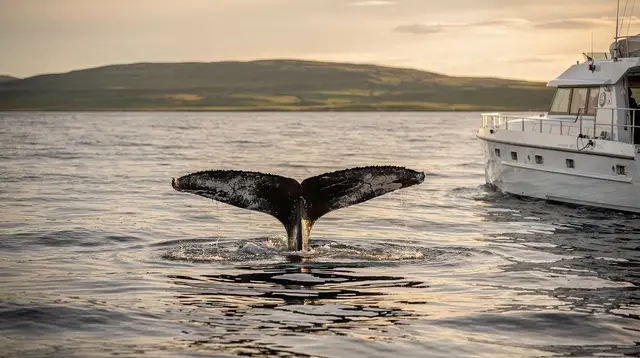
Sperm whales are the anchor species for whale watching out of Andenes, present in the deep water off the coast for much of the year because males of the species feed here regularly, diving for long stretches to hunt in the depths before surfacing. Beyond sperm whales, other species appear more seasonally and less predictably — this is open ocean wildlife, not a managed sanctuary, and no operator can tell you in advance exactly what a given trip will produce.
That uncertainty is worth sitting with before booking. a whale-watching cruise combined with entry to the whale center in Andenes is the standard option, and pairing the boat trip with the center gives you something concrete regardless of what the ocean provides that day — exhibits and information that don’t depend on a sighting to be worthwhile.
How long it takes, and what the boat feels like
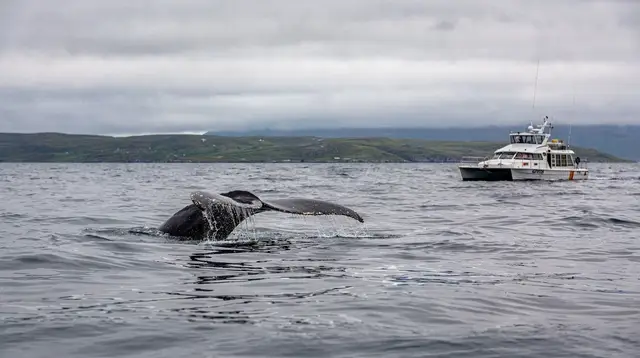
Most cruises run three to five hours round trip, including the transit out to the deeper water where whales are typically found. That’s a meaningful chunk of a day, and it’s worth planning around rather than squeezing in as an afterthought. a whale-watching trip aboard a classic catamaran tends to handle open swell more comfortably than a smaller boat, which matters if you or anyone in your group is prone to seasickness — a real and common concern on a multi-hour trip in open Arctic water, not a minor detail.
For a faster, more agile alternative that covers more coastline in less time, a RIB boat safari focused on seals and birdlife out of nearby Nyksund is a different kind of wildlife outing entirely, better suited to travelers who want speed and proximity over comfort.
What isn’t guaranteed, and why that matters
The single most important thing to understand before booking a whale-watching cruise anywhere, including Andenes, is that sightings are never promised. These are wild animals moving through open ocean on their own patterns, not performers on a schedule. Reputable operators say this plainly rather than implying a guarantee, and some offer a partial refund or a free rebooking if a trip comes back empty — but policies vary, and it’s worth checking before you book rather than assuming. The same honesty applies to every wildlife encounter across this region, from sea eagle safaris further south to the puffin colony on nearby Bleiksøya.
Combining Andenes with the rest of the trip
Andenes sits well north of the main Lofoten islands, in Vesterålen, and reaching it typically means a multi-hour drive north from a Lofoten base, or flying into a regional airport and renting a car from there. Because of that distance, most visitors treat Andenes as part of a longer, combined itinerary rather than a standalone day trip — a 7-day route covering both Lofoten and Vesterålen is the most common way travelers fit whale watching in alongside the more famous stops further south.
Once you’re in the area, Bleik, a 15-minute drive away, adds a long beach and a puffin colony to the same day, and a scenic wildlife route around Andøya covers more of the island’s coastline if you have extra time to spare. a broader eagle and wildlife safari by RIB boat is another option for travelers who want to combine whale territory with the sea eagle sightings more commonly associated with areas further south, since both fall under the same wider category of marine wildlife tourism in this region.
Timing your visit
Weather this far north changes quickly, and sea conditions can shift a scheduled cruise’s route or duration on short notice. For the wider question of when to visit this whole region, whale watching is one factor among several — northern lights odds, midnight sun timing, and general accessibility all shift by season, and Andenes-specific whale watching runs for a good part of the year rather than a narrow window, though exact conditions and operator schedules vary.
Classic Catamaran or RIB: What Actually Changes
The boat you book shapes more of the day than most people expect going in. A classic catamaran trip runs slower and more sheltered, with an enclosed cabin and steadier movement through swell — the more forgiving option for anyone prone to seasickness, or simply unsure how they’ll handle several hours on open Arctic water. A RIB boat trades that shelter for speed and proximity: it covers ground faster, sits lower to the water, and puts passengers closer to whatever’s actually happening on the surface, at the cost of more exposure to wind, spray, and a rougher ride when the sea isn’t calm.
| Boat type | Comfort | Speed | Best suited to |
|---|---|---|---|
| Classic catamaran | Higher — enclosed cabin, steadier in swell | Slower | Seasickness-prone travelers, longer sits, families |
| RIB | Lower — open, exposed to spray and wind | Faster | Travelers prioritizing proximity and speed over comfort |
Neither option changes the fundamental fact that sightings aren’t guaranteed either way — the boat choice shapes how the hours on the water feel, not the odds of seeing a whale.
What the Whale Center Actually Adds
Pairing a cruise with entry to the whale center in Andenes is worth understanding on its own terms, separate from the boat trip itself. The center’s exhibits explain the biology and behavior behind what you might, or might not, see on the water: why sperm whales dive as deep and as long as they do, what draws them specifically to this stretch of coast, and how the local industry around whale watching developed here. On a day when the ocean doesn’t cooperate, that context is the difference between coming away with nothing and coming away having learned something concrete about the animals the whole trip is built around.
It’s worth visiting even after a good day on the water, since a sighting from a moving boat, often at some distance, rarely explains itself the way a well-designed exhibit can. Treating the center and the cruise as two halves of one experience, rather than the center as a consolation prize, gets more out of the combined ticket either way.
What to Wear and Pack
Layering matters here as much as it does anywhere else in this region, and arguably more, since a boat on open water offers no shelter from wind chill the way a car or a building would. A windproof, waterproof outer layer is close to essential regardless of season, and warm layers underneath matter even in summer, when air temperature on shore says nothing about how cold a few hours on open water will feel. The general packing guide for Lofoten covers the layering system in more depth, and most of its logic applies directly to a whale-watching day even though Andenes sits outside the main Lofoten islands proper.
Anti-seasickness preparation is worth thinking through before boarding rather than once underway — medication, if you use it, generally works better taken well ahead of departure rather than after symptoms start, and choosing a seat with a view of the horizon rather than below deck tends to help regardless of boat type.
Photographing Whales From a Moving Boat
A moving boat on open water is a genuinely difficult shooting platform, and it’s worth setting expectations accordingly before the trip rather than during it. A fast shutter speed matters more than usual to freeze both the boat’s motion and the animal’s, and a lens with some reach helps, since sightings often happen at a respectful distance rather than right alongside the boat — operators generally maintain distance from the animals as standard practice, which is good for the whales and means a wide-angle shot alone won’t capture much. The photography guide for the wider region covers camera handling in cold, damp, moving conditions in more depth, much of which carries over directly from a boat deck to a hiking trail.
Andenes Beyond the Whale Cruise
A whale-watching day doesn’t have to be the only thing on the itinerary once you’ve made the trip this far north. Bleik’s beach and its offshore puffin colony are close enough to fold into the same day without adding meaningfully to the drive, and the wider guide to puffins and seabirds covers what to expect from that colony specifically, alongside the larger ones further south at Værøy and Røst. Further along the coast, Stokmarknes adds another stop for travelers continuing through Vesterålen rather than turning back toward Lofoten immediately.
For the fuller picture of what swims and surfaces in these waters beyond the Andenes-specific cruise, the guide to whales of Vesterålen covers the wider regional picture, including how sighting patterns differ slightly along different stretches of this coast.
A Realistic Day, Start to Finish
A typical Andenes whale-watching day starts with checking in at the harbor with time to spare before departure, since boats leave on a fixed schedule regardless of who’s running late, and an Arctic ocean crossing isn’t the place to test how flexible that schedule really is. Boarding itself takes a few minutes, followed by transit time out to the deeper water where sightings are more likely — this stretch can take the better part of an hour depending on the boat and the specific route that day, and it’s not unusual for some of the most interesting wildlife of the whole trip to appear during this transit rather than at the final destination.
Once in the target area, the crew typically slows and watches, adjusting position based on recent activity reports from other boats or from what’s visible on the surface. This is the part of the trip that varies most in length and outcome — a good day might mean an extended, close encounter, while a quiet day means more watching and waiting than actual sighting. Either way, the return transit mirrors the outbound leg, and the whole outing typically wraps within the three-to-five-hour window mentioned earlier, weather and sightings permitting.
Building in slack either side of the booking is worth doing deliberately rather than as an afterthought — a delayed departure due to weather, or a longer session on the water because of an active sighting, can push the whole day later than planned, and scheduling something tight immediately afterward risks turning a good wildlife day into a stressful one.
Nearby Bases Worth Knowing About
Andenes itself has basic infrastructure for a day trip, but travelers staying overnight in the area more often base out of Sortland or push further along the outer coast toward Nyksund, a former fishing settlement now mostly known for its remoteness and the RIB safaris that depart from nearby. Either base works logistically, though Sortland offers more everyday services — fuel, groceries, a wider choice of lodging — while the Nyksund side leans further into the wilder, more exposed character of this stretch of coast.
Whichever base you choose, it’s worth confirming departure points and check-in times directly with the specific operator rather than assuming every whale-watching cruise leaves from the same harbor. Andenes itself hosts most of the scheduled departures, but a booking made through a base further along the coast can sometimes involve a shuttle or a separate meeting point, and that detail is easy to miss when comparing tour listings purely on price or duration.
Whale watching in Andenes — frequently asked questions
Are whale sightings guaranteed on a cruise from Andenes?
No. Reputable operators are upfront that wildlife sightings are never guaranteed, since these are wild animals in open ocean rather than a controlled environment. Some operators offer a partial refund or rebooking policy if no whales are seen, but this varies by company.
How long does a typical whale-watching cruise take?
Most cruises out of Andenes run between three and five hours round trip, including time to reach the deeper water where whales are more commonly found.
Which whale species are most commonly seen off Andenes?
Sperm whales are the species most associated with this stretch of coast, found in unusually deep water close to shore for much of the year, with other species appearing depending on the season.
Do I need to worry about seasickness?
It’s a real consideration on any open-water cruise this far north. Boats vary in size and stability, and a classic catamaran tends to handle swell more comfortably than a smaller RIB, though neither eliminates the risk entirely.
What should I wear on a whale-watching trip?
Warm, windproof layers regardless of season, since sea temperatures out on open water are cold year-round and conditions can shift quickly even on a clear day.
Can you combine whale watching with other activities near Andenes?
Yes — many visitors pair a cruise with a stop at the beach and puffin colony in nearby Bleik, or a RIB safari that also covers seals and seabirds along the coast.
Is Andenes easy to reach from the main Lofoten islands?
It requires a multi-hour drive north from Lofoten into Vesterålen, or a flight into a regional airport, so most visitors treat it as part of a longer, combined trip rather than a quick side excursion.
Whale watching tours on GetYourGuide
Verified deep-linked GetYourGuide tours. Book through these links and we earn a small commission at no cost to you.
Photos show the destination, not the operator's own images.