Sea Eagle Safaris in Lofoten: Where, How, and When
What is a sea eagle safari in Lofoten?
It's a guided boat trip, usually by RIB or small vessel, along coastal stretches where white-tailed sea eagles regularly hunt and perch. Sightings are common but not guaranteed, and trips typically run from a coastal town such as Svolvær.
A bird that recovered, and a coastline that shows it
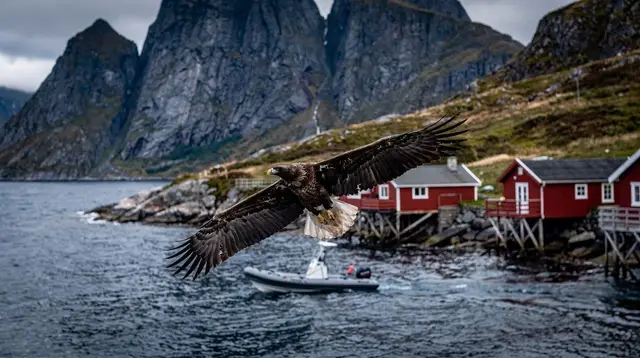
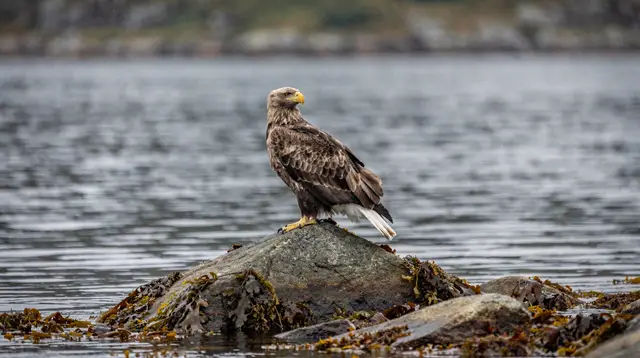
The white-tailed sea eagle is Europe’s largest bird of prey, and along the Lofoten coast it’s a genuinely common sight rather than a rare stroke of luck — a fact that surprises visitors who assume any wildlife safari in the Arctic means a slim chance of seeing anything at all. These are large, dark birds with a pale head and a wingspan that can reach well over two metres, usually spotted perched on coastal rock or wheeling low over the water looking for fish. Norway’s coast, including this archipelago, holds one of the healthier populations in Europe, which is part of why dedicated safaris built around the species exist here at all.
That said, “common” doesn’t mean guaranteed, and any operator or article claiming a certain sighting on every trip is overstating things. What can be said honestly is that the odds are good, the coastal geography suits the species, and a guided trip aimed specifically at finding them makes far better use of a few hours than an unguided attempt.
Where the safaris run
Most sea eagle safaris depart from Svolvær, on Austvågøya, which sits close to some of the coastline where eagles are most consistently reported — including the stretch out toward Trollfjord and the wider Raftsundet strait. This isn’t the only place in the archipelago where the birds are seen, but it’s the area with the most established tour infrastructure built around them specifically, rather than eagles being an incidental sighting on a general sightseeing trip.
Further north, safaris around Sortland and the Vesterålen coast sometimes combine sea eagle spotting with other wildlife themes, since that stretch of coast overlaps with areas known for moose as well as birdlife. A wildlife safari from Svolvær covering both moose and sea eagles is one way to combine themes in a single outing rather than booking separate trips.
A different option exists further along the entry-point coast near Bodø, where safaris cover the Saltstraumen strait — better known for its powerful tidal current than for sea eagles specifically, but a stretch of coast that overlaps with eagle activity as well. a RIB safari covering the Saltstraumen tidal current out of Bodø is worth considering if your route already passes through Bodø rather than starting in Svolvær, since it folds wildlife spotting into a trip built primarily around the strait itself. Our guide to a Saltstraumen day trip covers the tidal phenomenon in more detail for anyone weighing this against a dedicated Svolvær-based safari.
How a typical trip works
Sea eagle safaris are almost always boat-based, since the birds hunt and perch along the coastline rather than inland, and a boat allows a guide to approach known perching spots without disturbing the birds from land. Trips typically run two to four hours, depart from a harbour town, and follow a stretch of coastline the operator knows well from experience — this is where local knowledge genuinely matters, since knowing where eagles have been active in the preceding days is far more useful than simply covering more distance.
| Trip style | Typical length | What to expect |
|---|---|---|
| RIB-based sea eagle safari | 2–3 hours | Faster pace, closer to shore quickly, more exposure to wind and spray |
| Combined wildlife/nature safari | 3–4 hours | Broader focus — eagles alongside other coastal wildlife or scenery |
| Trollfjord route with eagle spotting | 3–4 hours | Sea eagle sightings folded into a scenic fjord cruise |
A trip like the sea eagle safari to Trollfjord departing from Svolvær is a good example of the second category — a scenic destination with wildlife spotting built into the same outing, rather than a pure wildlife-focused trip. Anyone choosing between a RIB and a slower boat should weigh comfort against pace: the guide to RIB versus classic boat trips covers that trade-off in more detail.
What Actually Happens During the Trip
Once the boat clears the harbour, most of a safari is spent moving slowly along a stretch of coastline while the guide scans rock outcrops, tree lines, and the water’s surface for activity — sea eagles spend a considerable amount of time simply perched, watching for fish, rather than constantly airborne, so a still bird on a rock is as much a normal sighting as one in flight. When a guide spots an eagle, the boat typically slows and holds a steady distance rather than moving directly toward it, giving everyone aboard a chance to look and photograph without pushing the bird to relocate.
Flight sightings tend to happen when a bird has spotted a fish near the surface and drops toward the water, which is the moment most trips are built around even though it can’t be scheduled or predicted. Guides read cues like circling behaviour or other birds reacting to a potential feeding opportunity, and a good operator explains what they’re watching for rather than just pointing at the sky after the fact — part of what separates a well-run wildlife trip from one that’s simply hoping to get lucky.
Photographing Sea Eagles From a Moving Boat
A boat deck is a harder shooting position than solid ground, and it’s worth planning for that rather than assuming a wildlife photo works the same way it would from a fixed viewpoint. Bracing against a rail or seat back, keeping both hands on the camera, and accepting a faster shutter speed than you might default to on land all matter more here than lens choice alone. Because eagles are typically seen at a real distance rather than close up, some length of zoom helps, but a longer lens on an unstable platform can also be harder to hold steady than a shorter one — there’s a real trade-off, not a simple “longer is better” rule.
Morning light and calmer water, discussed further in our Lofoten photography guide, both help on a technical level, but neither is guaranteed, and a genuinely good sighting in flat grey light is still worth having even if it doesn’t produce the photo you pictured beforehand. Treating the safari primarily as a wildlife encounter, with photography as a secondary outcome rather than the whole point, tends to make for a better trip regardless of what the camera ends up capturing.
Season and timing
Sea eagles are present along the Lofoten coast throughout the year, since they’re a resident species rather than a seasonal migrant passing through. Safaris, however, run more frequently and reliably from spring through autumn, when boat operations across the archipelago are generally more consistent and daylight hours are longer. Winter trips exist but are less common and more weather-dependent, and during the polar night stretch in December and January, the short daylight window limits how much of the day is usable for a boat-based safari at all.
Morning departures often mean calmer water, which matters both for comfort and for photography, since a stiller sea makes for a steadier shooting platform. As with any outdoor activity in this region, weather can shift within the hour, and a trip should always be booked with that variability in mind rather than an assumption of calm seas.
Choosing an operator responsibly
A sea eagle safari that respects the birds keeps a sensible distance, doesn’t chase or crowd an eagle to force a closer photo, and generally avoids feeding wild birds to draw them in artificially — a practice that some operators historically used and that has become more contested as awareness of its effects on wild behaviour has grown. When comparing operators, it’s worth asking directly how a trip approaches sightings, since the answer says a lot about how the company operates more broadly. This applies as much to sea eagle safaris as it does to boat-based wildlife trips generally, including the whale watching operations further north around Andenes.
Sea eagles are also only one part of the coastal wildlife picture here, and it’s worth going in with realistic expectations about what else you might see rather than only watching for eagles. Our broader wildlife in Lofoten guide covers the range of species sharing this coastline, and seabird colonies further out, including puffins on islands like Værøy and Røst, are covered separately in our guide to puffins and seabirds — a different kind of trip from a sea eagle safari, but one that often comes up in the same planning conversation for visitors building a wildlife-focused itinerary.
Fitting a Safari Into a Longer Trip
A sea eagle safari sits comfortably alongside most other activities based around Svolvær, since it’s a half-day commitment at most and doesn’t require the kind of recovery time a long hike or a full-day boat trip elsewhere might. It pairs naturally with a broader three-day itinerary that already includes a Svolvær base, and travelers weighing when to schedule it against other harbour-based activities generally do best treating it as a morning outing, leaving the afternoon free for the town itself or a second activity.
Timing the whole trip around this safari specifically is rarely necessary, since eagles are present year-round even though safari frequency varies by season — see our guide to the best time to visit Lofoten for how sea eagle safaris fit into the archipelago’s broader seasonal rhythm alongside northern lights, midnight sun, and the skrei fishery.
What to bring
Regardless of season, a boat trip along this coast is colder than the air temperature on land suggests, particularly on a RIB, where wind and spray add to the chill. Waterproof layers, a warm hat, and gloves are worth having even in summer. A camera with some zoom capability helps, since eagles are usually spotted at a respectful distance rather than close up, and a rocking boat rewards a faster shutter speed over a slow, deliberate one.
Sunglasses or some form of eye protection are worth having too, since the glare off open water can be considerable even under overcast skies, and a couple of hours of squinting against it takes the edge off a trip that should otherwise be comfortable. If seasickness is a concern, treating it before boarding rather than after the boat is already moving matters more on an open RIB, where there’s no cabin to retreat to if conditions turn choppier than expected partway through the trip.
Setting Realistic Expectations
The single most useful thing to bring to a sea eagle safari is a realistic sense of what a wildlife encounter here actually looks like: not a guaranteed close pass with a bird filling the frame, but a genuine, unstaged view of a large, resident predator doing what it does along a coastline it has always lived on. Some trips deliver several sightings within the first hour; others take longer, or produce a distant view rather than a close one, and that variability is the nature of watching wild animals rather than a shortcoming of any particular operator.
Framed that way, a sea eagle safari tends to land well even on a quieter day, because the baseline experience — moving along an Arctic coastline with a guide who genuinely knows where to look — holds up regardless of exactly how close the birds come. Visitors expecting something closer to a zoo enclosure than an actual wild encounter are the ones most likely to leave disappointed, and it’s worth adjusting that expectation before booking rather than during the trip itself.
It also helps to remember that the coastline itself is doing a lot of the work even between sightings. The stretch of water most safaris cover runs past cliffs, small islands, and open channels that look different depending on the light and the state of the tide, and a guide with local knowledge will often point out other things worth noticing along the way — a seal hauled out on a rock, a different seabird working the same waters, or simply how the weather is shifting across the archipelago as the boat moves. None of that is the headline reason to book the trip, but it’s a large part of why even a quieter sighting day still tends to feel worthwhile once you’re back on land.
Sea eagle sightings and what to expect
Are sea eagle sightings guaranteed on a safari?
No responsible operator guarantees wildlife sightings. White-tailed sea eagles are commonly seen along this coast, but no specific trip can promise an encounter.
What time of year is best for a sea eagle safari?
Sea eagles are present in the region year-round, but safaris run most frequently from spring through autumn, when boat operations are more reliable and daylight is longer.
Do I need any experience to join a sea eagle safari?
No. These are guided trips designed for general visitors, with no climbing, diving, or specialist skill required, though warm layers are essential.
What’s the difference between a RIB safari and a slower boat trip?
A RIB moves faster and gets closer to the coast quickly, with more exposure to wind and spray, while a slower or classic boat offers a steadier, more sheltered ride, sometimes with a cabin.
Where in Lofoten are sea eagles most often seen?
The coastal stretch around Svolvær and toward Trollfjord and Raftsundet is one of the more consistently reported areas, though sightings occur along much of the archipelago’s coastline.
Can a sea eagle safari be combined with other wildlife spotting?
Some operators combine sea eagle safaris with broader wildlife or nature themes, including other coastal birdlife, though this varies by tour and should be checked before booking.
Sea eagle safaris on GetYourGuide
Verified deep-linked GetYourGuide tours. Book through these links and we earn a small commission at no cost to you.
Photos show the destination, not the operator's own images.