Trollfjord Cruises: RIB, Classic Boat, or Electric Ship
What's the best way to visit Trollfjord?
It depends on your priorities. A RIB boat is faster and better for wildlife spotting but exposed to wind and spray. A classic boat is slower and more comfortable, often with food service. A silent electric ship reduces noise and engine vibration, which some travelers find changes the experience of the narrow fjord itself.
The same destination, three different boats
Trollfjord is a fixed point on the map — a narrow sea inlet on the east side of Austvågøya, roughly two kilometers long, with an entrance only about a hundred meters wide between steep rock walls. What changes is how you get in there, and that choice shapes the experience more than most travelers expect before booking. Departures run mainly out of Svolvær, and the main decision isn’t really whether to go — most visitors staying in the area do — but which type of boat to take.
RIB boats: fast, close, and exposed
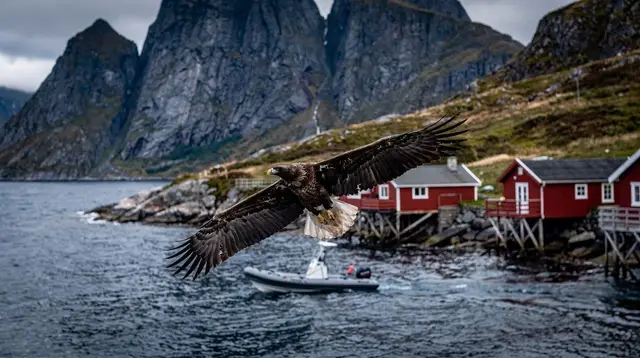
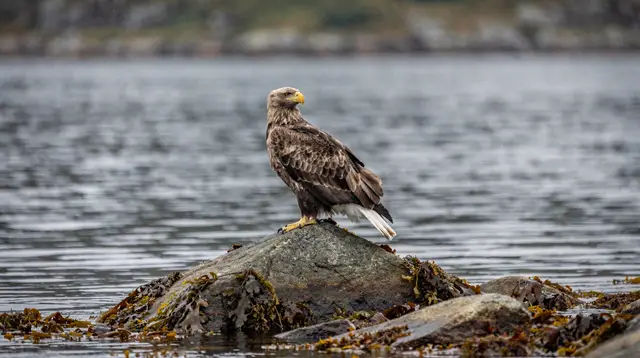
A RIB (rigid inflatable boat) trades comfort for speed and maneuverability. These boats can cover more distance in less time and tend to position closer to wildlife along the way, which is why a RIB-based wildlife cruise into Trollfjord is often the pick for travelers whose main interest is spotting sea eagles rather than a leisurely ride. The tradeoff is exposure: RIB trips are open-air, run at higher speed, and put you closer to wind and spray, particularly at the fjord entrance where conditions can shift quickly.
Operators generally issue weatherproof suits, but this remains the least sheltered of the three main options, and it’s worth thinking honestly about how you handle cold wind before choosing it. Rough weather can turn a comfortable outing into an uncomfortable one on any boat type, but the effect is more pronounced on an open RIB.
For those specifically drawn to the wildlife angle, a combined Trollfjord cruise and sea eagle safari from Svolvær folds both goals into one departure, which suits travelers trying to cover more ground on a tight schedule.
Classic boats: slower, sheltered, and social
A classic boat — larger, enclosed, generally slower — is the more comfortable of the three options and the one that suits travelers who’d rather sit back than brace against wind. a standard Trollfjord boat cruise from Svolvær typically runs at a gentler pace, often with indoor seating and sometimes food service on board, and covers the same route into the fjord without the physical intensity of a RIB. This is generally the better choice for families, older travelers, or anyone prone to seasickness who still wants time in the open air on deck when conditions allow.
The slower pace also means more time to actually look at the landscape rather than process it at speed — something worth weighing if photography or simply taking in the scenery matters more to you than covering distance quickly.
Electric ships: quiet water, different atmosphere
A newer option on this route is the silent electric ship, and it changes the experience in a way that’s easy to underestimate before trying it. a Trollfjord cruise aboard a silent electric ship removes much of the engine noise and vibration that define a typical diesel-powered boat trip, which changes how sound carries across the water — wildlife calls, the echo off the fjord walls, even the quiet of the place itself become more noticeable. It’s not necessarily faster or slower than a classic boat, but the atmosphere on board and the way the fjord itself is experienced differs meaningfully from either of the other two options.
| Boat type | Pace | Comfort | Best suited to |
|---|---|---|---|
| RIB | Fast | Exposed to wind and spray | Wildlife spotting, shorter time commitment |
| Classic boat | Moderate | Enclosed, often with food service | Families, comfort-focused travelers |
| Electric ship | Moderate | Quiet, low vibration | Travelers prioritizing atmosphere and sound |
Season and timing
Cruises into Trollfjord run through most of the year, though the specific schedule and which boat types are operating varies by season. Summer, especially during the midnight sun window, brings the longest daylight and the calmest average conditions, while winter departures trade daylight hours for the possibility of a different, starker version of the same fjord. Whatever the season, Lofoten’s weather can shift within an hour, so a cruise scheduled for calm water can still encounter wind and swell partway through — this applies to all three boat types, not just the smaller RIBs.
For travelers weighing which season to visit at all, this fits into the broader question of when to visit Lofoten, where Trollfjord access is one factor among many, alongside northern lights odds, midnight sun timing, and general trip logistics.
Fitting it into your trip
Most Trollfjord cruises depart from Svolvær and run a few hours round trip, which makes the excursion realistic even on a single-day visit to the area, particularly for cruise ship passengers with a fixed window ashore. Some routes pass close to Skrova or stop near Kabelvåg, adding a secondary point of interest to the same outing without extending the day significantly.
Beyond the cruise itself, day tours from Svolvær commonly bundle Trollfjord with other nearby activities — a walking tour of Svolvær, a stop at a local workshop, or additional wildlife viewing — for travelers who want to build a fuller day around the boat trip rather than treating it as a standalone excursion.
Choosing between the three
There’s no single correct answer here — it depends on what you’re optimizing for. A RIB rewards travelers chasing wildlife encounters and shorter time commitments; a classic boat suits those who want comfort and a slower pace; an electric ship suits those curious about how removing engine noise changes the experience of a place already defined by quiet, steep water. All three reach the same fjord, and none can promise perfect weather or guaranteed wildlife sightings, since nothing about conditions this far north is ever fixed in advance.
Booking practicalities: timing, group size, and cancellations
None of the three boat types run on a schedule dense enough to assume you can simply turn up and board — departures are limited compared with, say, a city ferry, and popular time slots in the middle of summer fill up in advance. Booking a few days ahead rather than the morning of is the safer approach if a specific date matters to your itinerary, particularly if you’re trying to line up a Trollfjord cruise with only one or two free afternoons in Svolvær. RIB boats in particular tend to run in smaller groups than classic boats, simply because the vessels themselves carry fewer passengers, which can mean earlier sell-outs even when overall demand looks similar across boat types.
Weather-related cancellations or rescheduling are a normal part of booking a boat trip this far north, not a sign of anything unusual with a specific operator. Because the entrance to Trollfjord is narrow and conditions can shift within the hour, a departure that looked fine on the forecast the day before can still be postponed on the morning itself if wind or swell picks up unexpectedly. Most operators rebook rather than simply cancel outright, but it’s worth building at least one spare day into a Svolvær stay if a Trollfjord cruise is a priority rather than a nice-to-have, so a weather delay doesn’t mean missing it entirely.
Group size and boat type also affect how personal the experience feels. A RIB with a handful of passengers puts you close to the crew and to whichever wildlife is spotted along the way, with real-time commentary and quick course changes when something appears. A larger classic boat spreads a bigger group across more deck space and indoor seating, which trades some of that immediacy for comfort and, often, a lower price point per person. Neither is objectively better — it depends on whether the trip is meant to be the day’s main event or one part of a broader sightseeing itinerary.
How this compares to Lofoten’s other boat trips
Trollfjord is one of several boat-based excursions available out of Svolvær, and it’s worth placing it in that wider context rather than treating it as an isolated decision. The broader guide to boat trips from Svolvær covers how a Trollfjord cruise sits alongside other options departing the same harbor, including shorter sightseeing loops and dedicated wildlife-focused routes that don’t enter the fjord itself. For travelers with only one boat trip to fit into their schedule, Trollfjord’s combination of a genuinely distinctive landscape — the narrow entrance, the steep walls, the sense of the fjord closing in around the boat — with realistic wildlife-spotting odds along the way makes it a reasonable default choice over a more generic harbor cruise, though anyone specifically prioritizing one type of wildlife over the scenery might choose differently.
What the fjord sounds and feels like, not just looks like
Photographs of Trollfjord tend to flatten what’s actually a fairly physical experience once you’re inside the entrance. The water noticeably calms as the walls close in, wind that was present in the open channel outside often drops away almost entirely, and the acoustics change — engine noise, voices on deck, even the call of a passing bird carry differently once you’re boxed in by rock on both sides. This is part of why the electric ship option draws a different kind of interest than a straightforward comparison of speed or comfort would suggest: with the diesel engine noise removed, that acoustic shift becomes the most noticeable part of the whole trip rather than a detail buried under the sound of a motor.
Temperature also shifts in a way that’s easy to underestimate before experiencing it. The narrow inlet blocks direct wind more than it blocks cold, so even on a boat trip that felt reasonably comfortable in the open water outside, conditions right at the base of the fjord walls can feel noticeably colder and stiller at once — still air, but air that hasn’t been warmed by any exposure to open sun most of the day given how steep and shadowed the walls are. Layering for this contrast, rather than dressing only for conditions at the harbor in Svolvær, makes the time inside the fjord itself more comfortable regardless of which boat type you’ve chosen.
Cost, in context
Trollfjord cruises don’t carry a fixed price bracket separate from Lofoten’s general cost structure, but boat type is the main variable that moves the number: RIB trips and combined wildlife-and-fjord packages tend to sit toward the higher end of a typical guided excursion, reflecting the smaller group sizes and specialized equipment involved, while a standard classic boat cruise is usually the more moderate option of the three. None of this changes the region’s overall cost pattern — a rough per-person daily reference for Lofoten runs from around 980 NOK at the budget end, through roughly 3,190 NOK for a mid-range trip, up to about 7,500 NOK for a higher-end one, at approximately 11.2 NOK to the euro — and a Trollfjord cruise, whichever type you choose, is one line item within whichever of those budgets you’re already working from rather than a cost that reshapes the whole trip on its own.
Who might reasonably skip it
Not every visit to Lofoten needs to include a Trollfjord cruise, and it’s worth being honest about that rather than presenting it as an unmissable fixture. Travelers with very limited time who are prioritizing hiking, the fishing villages further west, or the northern lights specifically may find that a few hours spent on a boat trip competes directly with time better spent elsewhere on a short itinerary. Anyone prone to severe seasickness who has already found sheltered fjord water uncomfortable on a previous trip should weigh that experience against the promise of calmer conditions inside the fjord itself, since reaching it still means crossing open water first on most departures.
None of this makes Trollfjord a poor choice for most travelers — it remains one of the more distinctive short excursions available out of Svolvær — but a rushed, resentful version of the trip squeezed into an already packed day serves nobody, and a traveler who genuinely has no free half-day to spare is better off choosing one or two priorities and doing them properly than fitting in a version of everything.
Trollfjord cruises — frequently asked questions
How long is a typical Trollfjord cruise?
Most cruises from Svolvær run between two and four hours round trip, depending on the boat type and whether the route includes extra stops for wildlife.
Which boat type is best for seeing wildlife?
RIB boats tend to move faster and can position closer to sea eagles and other wildlife, though classic boats and electric ships still see plenty of birdlife along the way.
Is Trollfjord accessible year-round?
Boat access runs through most of the year, though conditions and specific departures vary by season, and rough weather can affect any scheduled trip regardless of season.
What is Trollfjord actually like once you’re inside it?
It’s a narrow sea inlet roughly two kilometers long with an entrance only about a hundred meters wide, framed by steep rock walls rising directly from the water on both sides.
Do RIB boats provide protective gear?
Operators typically issue weatherproof suits for RIB trips, since speed and open-air seating mean more exposure to wind and spray than on a classic or electric boat.
Can you combine a Trollfjord cruise with other activities?
Yes — many operators pair the cruise with a sea eagle safari or a stop near Kabelvåg or Skrova, since these sit along or near the same route out of Svolvær.
Fjord cruises on GetYourGuide
Verified deep-linked GetYourGuide tours. Book through these links and we earn a small commission at no cost to you.
Photos show the destination, not the operator's own images.