What Actually Happens in Lofoten Between January and April, When the Skrei Come Back
Arriving Between Seasons
I got to Svolvær in early February, which turned out to be a strange time to show up if you’re expecting the postcard version of Lofoten. The midnight sun is nowhere near, the polar night has already loosened its grip, and what’s left is a stretch of short, gray days with the harbor busier than the streets. I didn’t understand why until someone at the guesthouse mentioned, almost in passing, that the skrei were in.
Skrei is mature Arctic cod, and unlike the cod that lives around Lofoten year-round, these fish spend most of their lives out in the Barents Sea and only come south to the coastal waters here to spawn. That migration happens reliably every year between January and April, and it’s the reason the harbors I’d been walking past all week were suddenly full of boats that hadn’t been there a month earlier.
The Harbor Changes First
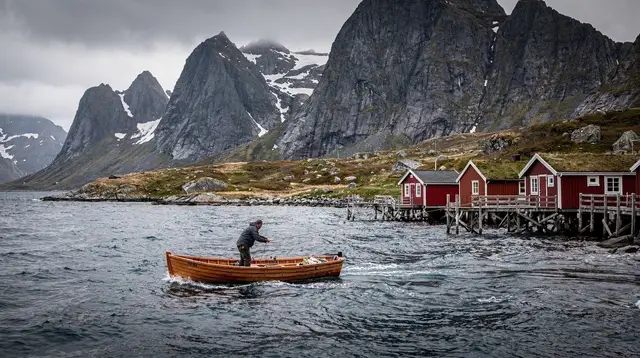
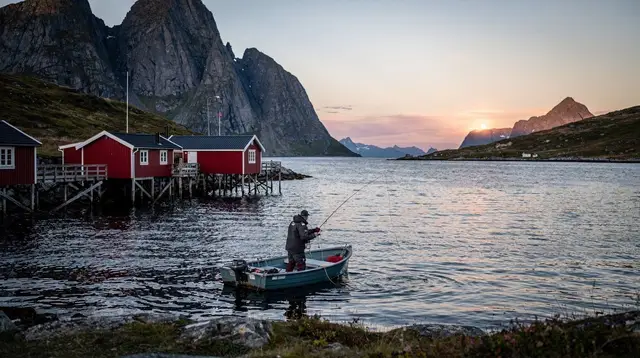
What struck me wasn’t a single dramatic moment — it was how much the ordinary texture of the villages shifted once the season was properly underway. In Ballstad, a working fishing port on Vestvågøya, boats were coming and going at hours that had nothing to do with tourist schedules, and the smell along the quay had none of the neutrality of a place set up for visitors. It smelled like work. Down in Stamsund, a regular stop for the coastal express, the same thing was happening on a smaller scale, boats tied up three and four deep against the dock.
The drying racks, the hjell, don’t fill up all at once. Early in the season they’re mostly bare frames, and by March they’re heavy with split cod strung along their full length, the wind doing the rest of the work that used to be the only preservation method available here. I’d read about this before coming — the stockfish trade that grew out of exactly this seasonal catch is old enough that it shaped trade routes into medieval Europe, which I’ve written about separately in a thousand years of dried cod — but reading about racks filling up over eight or ten weeks is different from driving past the same stretch of coast in January and again in March and actually seeing the difference.
Weather That Doesn’t Care About Your Plans
If there’s a single thing I’d tell someone planning to be here for skrei season, it’s that the weather runs the show more completely than in summer. Winters here hover somewhere around 0 to −3°C thanks to the Gulf Stream, which sounds almost mild until you factor in wind and the fact that conditions can flip from clear to socked-in within the hour. Boats don’t go out in everything, fishermen I spoke to were blunt about that, and neither should visitors planning their own days around a fixed schedule. More than once during my stay, a morning that looked settled turned into a grey, blowing afternoon by lunchtime, and I learned to treat any outdoor plan as provisional rather than fixed. Weather in Lofoten covers this in more detail than I can from one week’s experience, but it matches what I saw.
Darkness, Then Light Coming Back
Skrei season sits inside the aurora window, which runs roughly from September to early April and needs a dark, clear sky to deliver anything. Because the season starts not far past the tail end of the polar night, the early weeks still have genuinely long nights, which — when the sky actually cleared, which wasn’t every night — made for some of the better aurora-watching conditions of my stay. I went out with a guided tour rather than trying to chase clear patches on my own, mostly because the guides had a much better sense of where the cloud was breaking than I did from a single fixed location:
a guided evening tour from Svolvær built around finding clear sky for the northern lightsOn a night when the forecast looked more promising for a wider search radius, I tried a different operator with a stated focus on maximizing the chances of an actual sighting rather than just getting outdoors for the evening:
a dedicated aurora-hunting tour from Svolvær that ranges further to find clear skyNeither trip guaranteed anything — nothing here does, and any operator implying otherwise is overselling it — but both gave me a considerably better shot than standing in the guesthouse car park hoping.
Getting Out Into the Season, Not Just Looking at It
Watching the season from the harbor is one thing; getting out into the landscape it’s happening in is another. With enough snow on the ground, a guided snowshoe outing in the evening turned out to be a good way to be outside after dark without needing to drive anywhere or navigate unfamiliar terrain alone:
a guided evening snowshoe tour that also keeps an eye out for the northern lightsI also went out on the water once, on a half-day trip that runs along the coast near Svolvær and spends part of the route looking for sea eagles, which are common here regardless of season. It wasn’t a fishing trip and didn’t pretend to be, but it put me close enough to the working boats to get a sense of scale that I hadn’t had from the dock:
a half-day boat safari along the coast near Svolvær, looking for sea eaglesWhat I’d Tell Someone Coming for This
Come for skrei season expecting a working landscape, not a curated one. The villages that lean hardest into the fishery — Ballstad, Stamsund, the harbor side of Svolvær — aren’t dressed up for visitors in February the way they might be in July, and that’s exactly what makes the season worth seeing. Henningsvær still has its own character even outside the main season, and a detour there breaks up a week otherwise spent around the working harbors. If darkness and cold aren’t for you, this isn’t the visit to force; Lofoten in winter is honest about what the season demands, and best time to visit Lofoten lays out the alternatives if a summer trip suits you better.
But if you want to see the thing that’s actually kept these islands populated and working for a thousand years, rather than the version built around midnight sun and photographs, come in February or March and expect the boats, the smell, and the wind to set the schedule instead of you.
For the practical side of catching the season yourself — what to book, what to wear, how the fishery actually runs day to day — stockfish and skrei and fishing villages in Lofoten go further into the specifics than a week of watching from the harbor let me learn on my own.
Fishing trips on GetYourGuide
Verified deep-linked GetYourGuide tours. Book through these links and we earn a small commission at no cost to you.
Photos show the destination, not the operator's own images.