Waterside Saunas and Cold Plunges Around Lofoten
Where can you find a waterside sauna near Lofoten?
The two dedicated waterside sauna experiences bookable in this region sit outside Lofoten proper: a wood-fired barrel sauna facing the sea on Senja, and a purpose-built sauna village by the water in Bodø. Beyond those, many rorbu stays and hotels around Lofoten itself include a smaller sauna as part of the accommodation rather than a standalone experience.
Heat, Then Cold, Then Heat Again
The sauna-and-cold-plunge ritual has a straightforward logic to it: sit in dry heat until your body is thoroughly warm, step into sea water cold enough to take your breath away for a few seconds, then get back into the heat and let the contrast do whatever it does to you. It isn’t unique to this part of Norway — versions of the same ritual exist across Scandinavia and well beyond — but the setting around the Arctic north gives it a particular edge, since the water genuinely is cold enough here, most of the year, to make the plunge feel like something rather than a formality.
This guide covers where the practice shows up as a bookable, purpose-built experience near Lofoten, what a session actually involves for someone trying it for the first time, and which season suits it best — because the answer to that last question is less obvious than it sounds.
Where the Dedicated Sauna Experiences Actually Are
It’s worth being direct about geography here: the two standout, purpose-built waterside sauna experiences bookable in connection with a Lofoten trip aren’t in Lofoten itself. One sits on Senja, the large island beyond the archipelago that’s a separate trip in its own right rather than a Lofoten day excursion. The other is in Bodø, the mainland gateway city most travelers already pass through on the way to or from the ferry to Moskenes. Both are worth planning around deliberately rather than expecting to stumble onto a dedicated sauna house somewhere along the E10 inside Lofoten proper.
Senja: A Wood-Fired Barrel Facing the Sea
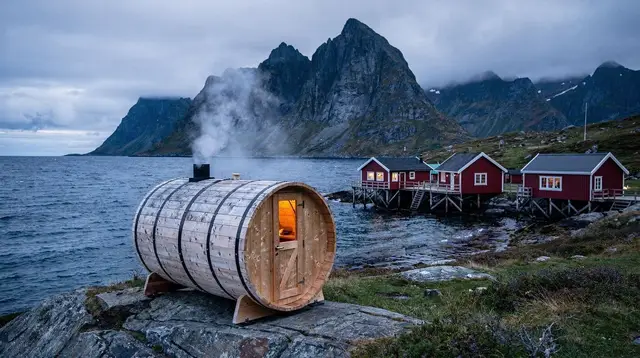
On Senja, a wood-fired barrel sauna set right at the water’s edge gives the ritual in its simplest, most traditional form: a compact wooden barrel heated by a wood stove rather than electric elements, facing open water with a short walk or a set of steps down to the sea for the cold half of the routine. Wood-fired heat behaves differently from electric heat — it takes longer to build and holds a different, often more humid warmth — and pairing it with a genuinely remote, quiet stretch of Arctic coastline is a large part of the appeal. Because Senja sits outside Lofoten, treat this as a deliberate add-on to a longer northern Norway trip rather than a quick stop; the comparison between Lofoten and Senja is worth reading if you’re deciding how to split your time between the two.
Bodø: A Purpose-Built Sauna Village
In Bodø, a entry ticket to a dedicated sauna village by the water gives a more developed version of the same idea — multiple sauna structures rather than a single barrel, generally set up to handle a steady flow of visitors moving between heat and cold water at their own pace throughout a session. Because Bodø is already a stop most Lofoten travelers pass through — it’s the mainland ferry port for the roughly three-to-four-hour crossing to Moskenes, and has its own airport covered in the airports guide for the region — a sauna village visit slots naturally into a day already built around transit, rather than requiring a special detour.
The Bodø–Moskenes ferry guide covers how that crossing fits into a wider itinerary if you’re routing through the city either way, and the things to do in Bodø roundup covers what else fills a stopover day there.
What a Session Actually Involves
A typical session runs in rounds rather than a single pass: heat up for a stretch of minutes until you’re sweating and thoroughly warm, then move to the water for a short, sharp immersion — often measured in seconds rather than minutes for a first attempt — before returning to the heat to recover and repeat. Most people do several rounds over the course of a booked session, with breaks to cool down gradually in the air between the hot and cold extremes rather than alternating instantly every time.
| Stage | What happens | Typical first-timer approach |
|---|---|---|
| Heat | Sit or lie in dry sauna heat until thoroughly warm | Several minutes, leave before feeling overheated |
| Cold plunge | Brief, full or partial immersion in sea water | A few seconds to start, extend gradually with experience |
| Recovery | Stand or sit in the open air, let the body settle | A couple of minutes before returning to heat |
| Repeat | Cycle through heat, cold, and recovery again | Two to four rounds is a common session length |
Nobody needs to push through discomfort to get the benefit that draws people to this ritual — the point is contrast and a controlled shock to the system, not endurance. First-timers are generally better off doing a short plunge and multiple rounds than one long, uncomfortable immersion.
The Cold Plunge Itself: What to Expect
The moment of stepping into cold sea water is genuinely intense the first time, and it’s worth being upfront about what that feels like rather than downplaying it: a sharp intake of breath, an urge to get out immediately, and a few seconds where your body’s instinct is simply to leave. That reaction fades with familiarity, and most people find each subsequent plunge easier than the last. It is not, however, something to treat casually — sudden cold-water immersion is a real cardiovascular event, and anyone with heart or circulation concerns, anyone pregnant, or anyone simply unsure of their tolerance should check with a doctor first and never plunge without someone else nearby.
Why Season Changes the Experience More Than You’d Expect
It’s tempting to assume sauna-and-plunge is a summer activity, since warmer air makes the whole idea seem more approachable. In practice, the opposite is often true here: winter delivers the sharpest, most dramatic version of the ritual, because sea temperatures drop while a well-fed wood-fired sauna still reaches full heat regardless of the season. The contrast between the two extremes is simply bigger in winter, which is exactly what the ritual is built around.
Summer sessions are gentler — the water is less shockingly cold, and the whole experience feels more like a warm-weather spa activity than an Arctic ritual. Given that Gulf Stream–moderated summers here run roughly 12 to 17°C in the air and winters sit closer to 0 to −3°C, the sea itself follows a similar seasonal swing, and a January plunge is a genuinely different experience from an August one. Neither season is wrong, but travelers chasing the sharpest version of the contrast should lean toward the darker months, ideally paired with a stay through the polar night or the wider winter season, when Lofoten in winter already means shorter days and colder air working in the sauna’s favor.
Whatever the season, the region’s core weather rule still applies: conditions on this coast can shift within an hour, and outdoor plunge spots have no shelter beyond what the sauna itself provides. Check conditions before heading out, and don’t assume a calm morning guarantees a calm evening.
Rorbu and Hotel Saunas: The Quieter Alternative
Not every sauna experience near Lofoten needs to be a dedicated, ticketed venue. Some rorbu stays and hotels around the islands include a smaller sauna as part of the accommodation itself, generally without the sea-facing drama of a purpose-built barrel or sauna village, but still offering the basic heat-and-recover ritual at the end of a long day of driving or hiking. This isn’t guaranteed with every booking — check the specific listing rather than assuming a waterfront rorbu comes with one — but it’s worth asking about when comparing options in the where-to-stay guide for Lofoten and the rorbu guide, both of which cover what to expect from this style of accommodation beyond the sauna question specifically.
Building a Sauna Evening Into a Longer Day
Because both dedicated sauna experiences sit at the edges of a typical Lofoten itinerary — Senja to the east, Bodø on the mainland side — the practical approach is to build the sauna session into a day that’s already headed that direction rather than making a special trip. In Bodø, that might mean scheduling the sauna village around a ferry crossing or a flight connection; travelers with an evening free before an early ferry the next morning could also look at pairing the visit with something on the water, like a sunset boat cruise watching for sea eagles, to make the most of a stopover day rather than treating the sauna as the only plan.
In winter, a sauna session also pairs naturally with other cold-weather activity earlier in the day — a half-day snowshoe tour followed by an evening of heat and cold water is a genuinely good combination, since the physical exertion of snowshoeing makes the sauna’s warmth land differently than it would after a day spent mostly in a car.
A Few Practical Notes Before Booking
Bring a swimsuit and a towel regardless of venue, and footwear you don’t mind getting wet for the walk between the heat and the water — bare feet on cold rock or gravel is an unwelcome surprise for first-timers. Hours and exact seasonal availability vary by venue, so check the current schedule for the specific date you’re planning around rather than assuming a year-round, fixed timetable. And because this is a genuinely expensive part of Norway to travel in overall, expect a dedicated sauna experience to sit closer to the mid-range end of a daily budget than the cheapest end of it, alongside the rest of a Lofoten or wider northern Norway itinerary — the Lofoten trip cost guide and the budget guide both put a wellness add-on like this in context against everyday costs.
For the broader category of wellness activities around the region, the wellness and sauna hub rounds up what else falls into this loose category.
Choosing Between Senja and Bodø
Since the two dedicated venues sit in opposite directions from Lofoten itself, the choice between them usually comes down to which way your trip is already headed rather than a direct comparison of the saunas on their own merits.
| Senja | Bodø | |
|---|---|---|
| Setting | A single wood-fired barrel facing open sea | A purpose-built village with multiple structures |
| Typical pairing | A dedicated northern Norway trip beyond Lofoten | A ferry crossing or flight connection already on the itinerary |
| Character | Quiet, remote, minimal infrastructure around it | Set up for a steady flow of visitors |
| Best fit | Travelers adding real time to see Senja itself | Travelers already routing through the city |
Neither is a detour worth making purely for the sauna alone — both work best folded into a trip that was already going that direction for other reasons, whether that’s Senja’s own coastal scenery or Bodø’s role as a mainland gateway and ferry port.
Shoulder Season and the Sauna Ritual
Because the sharpest version of the hot-cold contrast depends on genuinely cold water, the shoulder months — spring and autumn — sit in an interesting middle ground between summer’s gentler plunge and winter’s most dramatic one. Aurora season runs roughly September to early April, which means an autumn or early-winter sauna evening can plausibly be paired with an aurora watch afterward, without committing to the deepest cold or the shortest daylight of the true polar night. This is also, generally, a quieter travel period than the summer’s midnight-sun weeks, which can mean more flexibility booking a sauna slot on short notice compared with the busiest stretches of summer.
Etiquette Worth Knowing Before Your First Visit
A few unwritten norms are worth knowing going in, mainly so a first-timer doesn’t feel caught off guard. Move at your own pace rather than matching a group’s rhythm — nobody benefits from pushing through a plunge or a heat session longer than feels right just because others in the group are doing so. Keep noise and conversation reasonably low inside the sauna itself, since many visitors come specifically for the quiet as much as the heat. And treat the walk between sauna and water as part of the ritual rather than something to rush — moving deliberately on a wet or icy path matters more here than in almost any other setting, given how easy it is to slip while still adjusting to the temperature change.
Waterside Sauna and Cold Plunge: Common Questions
Is a waterside sauna available inside Lofoten itself?
The two standout, purpose-built experiences covered here sit outside Lofoten proper, on Senja and in Bodø. Inside Lofoten, sauna access is more likely to come through a rorbu stay or hotel that happens to include one, rather than a dedicated public venue.
How cold is the water for the plunge?
It varies by season, following the same pattern as the region’s air temperatures — colder in winter, milder in summer, moderated somewhat by the Gulf Stream compared with other Arctic locations at a similar latitude. Expect it to be genuinely cold enough to feel a sharp shock at any time of year.
Do I need to book in advance?
Treat any dedicated sauna venue as something worth booking ahead rather than turning up and hoping for space, particularly around popular travel weeks.
Can children take part?
Policies vary by venue, and cold-water plunges in particular warrant caution with children given the intensity of the shock. Check the specific venue’s guidance before assuming it’s suitable for a family group.
Is this a solo activity or a group one?
Both work — some travelers go for the solitude of a quiet sauna and empty stretch of coastline, others book as a group. Purpose-built venues generally accommodate either.
What happens if the weather turns bad during a session?
The sauna itself provides shelter regardless of what’s happening outside, but the walk to and from the water is exposed. Poor weather doesn’t usually cancel a session outright, but it can make the outdoor portion considerably less comfortable.
Sauna & wellness experiences on GetYourGuide
Verified deep-linked GetYourGuide tours. Book through these links and we earn a small commission at no cost to you.
Photos show the destination, not the operator's own images.