Going Fishing in Lofoten: Boats, the Skrei Season, and What Happens to the Catch
Do I need experience to go fishing in Lofoten?
No. Most fishing trips aimed at visitors are guided, provide equipment, and are built for people who have never fished before, alongside more experienced anglers. The main variable to plan around is the boat type and season rather than your own skill level.
Fishing here is not a novelty add-on
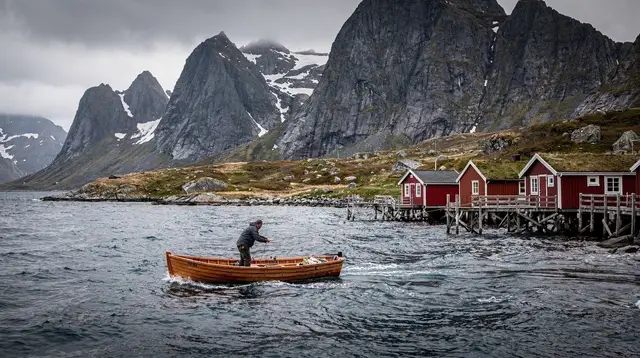
Lofoten’s entire settlement pattern exists because of fish, specifically the skrei, the Arctic cod that migrates south from the Barents Sea each winter to spawn along this coast. Recreational fishing trips for visitors sit directly on top of that history rather than beside it — the same waters, often the same harbours, and in some cases the same boats that have worked this coast for generations. That context matters when deciding what kind of trip to book, since a fishing outing here can range from a light, family-friendly boat trip to something much closer to the working tradition itself.
The two broad types of trip
Most fishing trips aimed at visitors fall into one of two categories: modern boat fishing with a local guide, using a motorised vessel and standard tackle, or a more traditional-style trip that leans into older methods and boat types associated with the region’s fishing history. Neither requires prior experience. Guided trips of both kinds typically supply rods, tackle, and any necessary safety equipment, and instruction is built in for people who have never fished before. The distinction matters less for what you will actually catch than for the character of the day itself: a modern boat trip tends to move around efficiently between fishing spots based on current conditions, while a traditional-style outing is generally paced more deliberately, with more emphasis on explanation and technique along the way.
| Trip style | What it emphasises | Good for |
|---|---|---|
| Modern boat fishing with a guide | Standard tackle, motorised boat, straightforward technique | First-timers, families, anyone wanting a simple, reliable outing |
| Traditional-style fishing trip | Older methods, more connection to local fishing culture | Visitors interested in the history behind the practice, not just the catch |
| Half-day trips | Shorter time commitment | Combining fishing with other activities the same day |
| Full-day trips | More time on the water, potentially further offshore | Anglers prioritising the fishing itself over a packed itinerary |
The skrei season, and why timing matters
The skrei arrive in large numbers between January and April, drawn south to spawn in the same waters that made Lofoten’s stockfish trade famous centuries ago. Fishing during this window taps directly into that seasonal abundance, and outfits running trips at this time often frame the experience explicitly around the tradition — not just “catching fish” but catching the specific fish this coast is known for. The trade-off is winter conditions: short daylight, especially close to the tail end of the polar night (roughly 6 December to 6 January), cold air in the 0 to −3°C range, and weather that can turn within the hour.
Outside the skrei season, fishing continues on a different rhythm, generally calmer and more geared toward a relaxed outing than a seasonal event. The midnight sun weeks, late May to mid-July, offer the mildest air (12 to 17°C) and effectively unlimited daylight, which suits visitors who would rather fish at whatever hour suits them than plan around a fixed window. Our best time to visit guide covers how this trade-off plays out across the whole year, not just for fishing.
What happens to your catch
This is worth asking directly rather than assuming, since practices differ between outfits and trip types. Some trips let you keep what you land, others prepare part of the catch for you to try on the spot or later the same day, and some operate on a catch-and-release basis depending on species, season, or local guidance. None of these arrangements should be taken for granted; confirming the policy when booking avoids a mismatch between expectation and what actually happens on the water.
Whatever the arrangement, the broader stockfish tradition is visible throughout the region regardless of whether you personally keep a catch. Wooden drying racks, called hjell, appear along the shoreline in working villages during and after the skrei season, hung with cod left to air-dry over weeks — the same preservation method that made Lofoten’s stockfish a major export for centuries and still supports part of the local economy today. Seeing these racks in person, hung with hundreds of split fish at the height of the season, tends to make the scale of the historical trade click in a way that reading about it beforehand rarely manages on its own.
Safety and what a guide actually adds
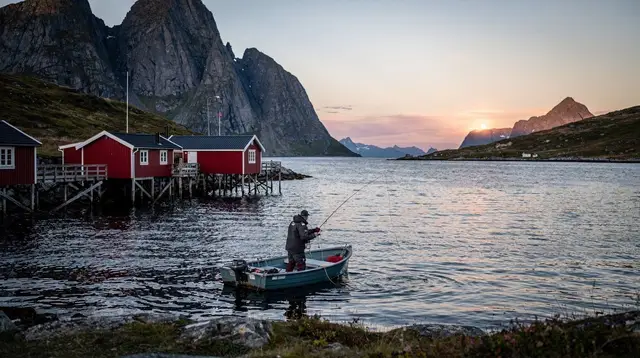
Arctic coastal waters are not forgiving of overconfidence. Currents around headlands and narrow straits — the Moskstraumen near Moskenes and Å being the most famous example — can be genuinely hazardous, water temperatures stay cold year-round even where air temperatures feel mild, and weather can shift from calm to rough within the hour. A local skipper’s value is less about finding fish and more about reading these conditions correctly, choosing where to go on a given day, and knowing when not to go out at all. Independent sea fishing is possible in some areas, but local rules and licensing can apply and change, so anyone considering it should check current regulations directly rather than assume the same freedoms as elsewhere; a guided trip removes that uncertainty entirely.
Booking a trip
For a straightforward introduction with a local guide and standard tackle provided, a guided fishing adventure out on the water is built around exactly the first-timer-to-experienced range most visitors fall into. If the historical angle matters more to you than simply catching fish, a traditional-style fishing trip leans into older methods and the broader story of how this coast has fished for generations. For a slightly different format that combines a boat outing with a local guide’s wider knowledge of the coastline, a boat fishing tour with a local guide is worth comparing directly against the two options above when deciding what fits your day.
Combining fishing with the rest of your day
Fishing trips typically run a few hours to most of a day, which leaves room to pair one with other activities depending on length and season. A morning on the water followed by an afternoon exploring one of the region’s fishing villages — many of which grew up around exactly this industry, including Henningsvær and Kabelvåg — rounds out the day with the history behind what you were just doing. If your itinerary is built around Svolvær or nearby Ballstad, boat-based activities cluster naturally in these harbours, and a sea kayaking tour out of Ballstad offers a quieter, paddle-powered contrast to a motorised fishing outing on the same stretch of coast. For visitors basing themselves around Reine on Moskenesøya, a Lofoten islands highlights day trip from Reine covers sightseeing beyond fishing on days when the weather or your own preference points elsewhere.
Our related guides to stockfish and the skrei season, food in Lofoten, and weather in Lofoten fill in the surrounding context — what actually happens to the fish after landing, how the local diet reflects the fishing industry, and how to read the forecast before heading out on the water.
Why this coast fishes the way it does
The reason Lofoten supports this scale of fishing activity comes down to geography rather than tradition alone. The islands sit directly across the path the skrei take on their annual migration from the Barents Sea to spawn, and the underwater shelf here creates conditions that concentrate the fish predictably enough that a fishing economy could be built around a fixed seasonal window centuries before anyone understood the biology behind it. That predictability is also why the season is so tightly bound to January through April: the fish arrive on a pattern set by ocean temperature and spawning behaviour, not by anything humans control, and outfits running trips at this time are working with a genuinely reliable seasonal event rather than a marketing framing of an otherwise ordinary fishery.
Outside the skrei window, fishing continues on different species and at a different rhythm, generally less concentrated but also less weather- and time-constrained. A summer trip is a more relaxed proposition in almost every sense: milder air, calmer typical conditions, and none of the pressure of a narrow migratory season, though also without the specific historical resonance of fishing for the same cod that built the region’s stockfish trade.
What a first-timer should actually expect on the water
Anyone who has never fished before should expect a genuinely beginner-friendly experience on most guided trips, with a skipper or guide handling boat operation, safety, and initial instruction on tackle and technique. Time on the water is spent mostly waiting and adjusting — moving between spots, changing depth or bait, and watching for a bite — rather than constant action, which surprises some first-timers expecting something closer to the pace of a nature documentary. Weather and sea conditions shape the day as much as anything else: a calm, clear outing feels entirely different from one spent bundled against wind and spray, and both are entirely normal for this coast.
Seasickness is worth planning for honestly if you have any history of it, since open coastal water, even on a calm day, moves differently from a sheltered fjord. Guides can usually advise on what to expect for a specific route, and simple precautions — eating beforehand, watching the horizon rather than close objects, standard motion-sickness remedies — reduce the risk for most people without needing to skip the activity altogether.
What to wear matters more on a boat than it does for most land-based Lofoten activities, since wind chill on open water is consistently colder than the air temperature alone suggests, in any season. Waterproof outer layers, warm layers underneath, and footwear that can get wet and stay warm are worth having regardless of whether the forecast looks mild before you leave the dock. Some outfits provide flotation suits or other protective gear as part of the trip; confirming this in advance saves scrambling for extra layers at the last minute, particularly on a winter departure before dawn.
Choosing a trip length and season to match your trip
A short half-day trip works well slotted into a broader day that also includes sightseeing elsewhere, while a full-day trip suits visitors who want fishing itself to be the centrepiece of the day rather than one activity among several. Matching trip length to season is worth thinking through too: winter’s short daylight window during the polar night (roughly 6 December to 6 January) limits how long any outdoor activity can run in natural light, while the midnight sun period (late May to mid-July) removes that constraint entirely and allows a late-evening or genuinely all-hours trip if an outfit offers one.
Whichever combination you choose, confirming what is included — gear, safety equipment, and the catch policy discussed earlier — before booking avoids the most common sources of mismatched expectations on the day itself.
Fishing trip questions before you go
What kind of fish can I expect to catch?
Cod is the most consistent catch year-round, with the skrei — migratory Arctic cod — arriving in large numbers from January to April. Other species turn up depending on season and location, but no outfit can guarantee a specific catch on any given trip, since fishing always depends on conditions.
Is fishing better in winter or summer?
The skrei season, January to April, is when cod fishing is at its most productive and most historically significant here. Summer trips, especially during the midnight sun weeks, trade some of that intensity for milder weather, longer light, and calmer logistics.
What happens to the fish I catch?
Arrangements vary by trip and outfit, and it is worth asking directly when booking whether you can keep your catch, whether it will be prepared for you, or whether the trip follows a catch-and-release approach. None of these should be assumed without checking.
Do I need my own fishing gear?
Guided trips generally provide rods, tackle, and any safety equipment needed, which is one of the main reasons visitors choose them over arranging a boat independently. Confirm exactly what is included when booking rather than assuming a specific gear list.
Is sea fishing in Lofoten dangerous?
Arctic coastal waters demand respect: cold water, changeable weather, and currents around headlands and straits like the Moskstraumen are real hazards. Guided trips with experienced local skippers manage this risk far better than an unguided outing in unfamiliar waters.
How long does a typical fishing trip last?
Trips range from a few hours to most of a day depending on the outfit and season. Shorter trips suit visitors combining fishing with other activities on the same day; longer ones suit anglers prioritising the fishing itself.
Can I fish independently without a guide?
Independent sea fishing is possible in some areas, though local rules and licensing can apply and change, so check current regulations directly before attempting it rather than assuming the same freedoms as fishing elsewhere. A guided trip removes this uncertainty.
Is fishing here connected to the stockfish tradition?
Yes. Modern recreational fishing trips sit alongside a much older commercial tradition of drying cod into stockfish, still visible on wooden racks (hjell) in many villages during and after the skrei season.
Fishing trips on GetYourGuide
Verified deep-linked GetYourGuide tours. Book through these links and we earn a small commission at no cost to you.
Photos show the destination, not the operator's own images.