Cold-Water Diving and Snorkeling in Lofoten
Do I need a drysuit to dive or snorkel in Lofoten?
Most operators provide drysuits or thick wetsuits as standard equipment, since Lofoten's Gulf Stream–moderated water stays cold enough year-round to require serious exposure protection. Guided family snorkeling trips typically supply suitable gear rather than expecting participants to bring their own.
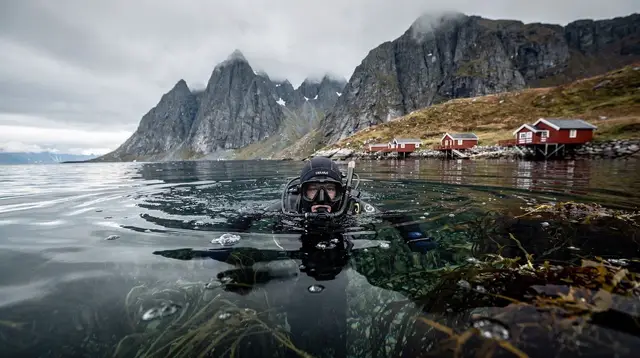
Ask most people what Lofoten is for, and diving isn’t usually the first answer — northern lights, fjord cruises, and hiking tend to dominate the list. But the same cold, clear, Gulf Stream–moderated water that supports the region’s fisheries also supports something worth getting in a suit for: dense kelp forests, Arctic marine life, and grey seals that are genuinely possible to encounter on the right trip.
What this guide covers. Exposure protection, what visibility and underwater terrain actually look like here, what wildlife is realistically on offer, and how to think about timing a trip.
Getting the exposure protection right
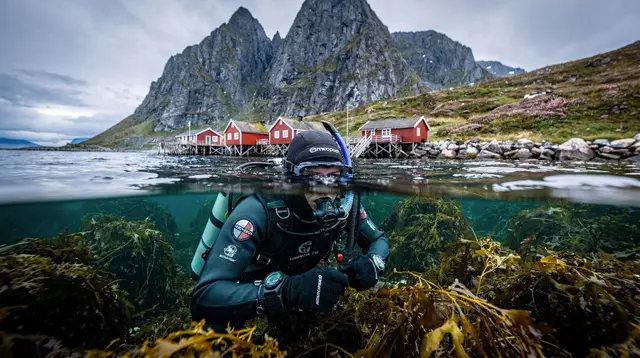
This is the single most important practical question, and it isn’t really optional. Lofoten sits above the Arctic Circle, and while the Gulf Stream keeps air temperatures far milder than the latitude would suggest — summers running roughly 12 to 17°C — the surrounding sea stays cold enough year-round that casual, unprotected snorkeling isn’t realistic. Guided operators account for this directly: family-oriented snorkeling trips typically supply drysuits or thick wetsuits rather than expecting participants to arrive equipped, and scuba experiences follow the same logic.
If you’re used to warm-water diving or snorkeling elsewhere, the practical adjustment isn’t really about skill — it’s about accepting that a well-fitted drysuit, not a rash guard, is the baseline gear here, and that briefings before entering the water matter more than they might at a tropical destination.
What the underwater terrain actually looks like
Lofoten’s coastal shallows are dominated by kelp forests — dense stands of laminaria that create a genuinely different underwater landscape from reef diving. These kelp beds shelter fish and invertebrate life and shift with the seasons and currents, giving each dive or snorkel a somewhat different character depending on conditions on the day. Visibility in cold, clear northern water can be excellent by the standards of many temperate diving destinations, though — as with anywhere — it varies with weather, tide, and recent conditions rather than holding to a single fixed number worth quoting as a guarantee.
This kelp-forest environment is also part of why Lofoten diving and snorkeling reads as a different category of experience from tropical reef diving rather than a colder substitute for it. Divers coming specifically for coral reefs are likely to find Lofoten a poor match for that expectation; divers curious about Arctic marine ecosystems will find exactly what they’re looking for.
Who this activity actually suits
Cold-water diving and snorkeling in Lofoten isn’t a fit for every traveler, and it’s worth being honest about that rather than presenting it as universally appealing. It suits visitors who are curious about a genuinely different underwater environment, comfortable with the idea of wearing serious exposure protection for a few hours, and not expecting a warm, tropical-style experience. It’s a poor fit for anyone hoping for coral reefs, bathtub-warm water, or a casual swim without any gear — that experience simply isn’t on offer at this latitude, and no amount of guiding changes the underlying water temperature.
Families with children old enough to follow safety instructions and comfortable in a wetsuit are often a better fit for the guided snorkeling format than very young children, since focus and the ability to follow a guide’s directions matter more here than general swimming ability. Anyone with a genuine cold intolerance, or specific medical conditions affected by cold exposure, should raise that directly with the operator before booking rather than discovering a problem partway through the day.
Seals, and what to realistically expect
Grey seals are the headline wildlife draw for snorkeling trips here, and some operators build routes specifically around areas where seals are known to haul out or forage. That said, no wildlife trip anywhere can promise an encounter — seals move on their own schedule, and a route built around their typical patterns improves the odds of a sighting without making one certain. Framing a trip around “a good chance of seeing seals in their own environment” is more honest than expecting a guaranteed close encounter.
Beyond seals, the broader marine life supported by Lofoten’s kelp forests and cold water is worth appreciating on its own terms rather than only as a backdrop to a seal sighting.
What a guided day actually involves
Most visitors experience Lofoten diving and snorkeling through a guided trip rather than independently, and it’s worth knowing roughly what that involves before booking. Expect a briefing on land covering the day’s conditions, the suit and equipment you’ll be given, and basic safety procedures specific to cold water, followed by a boat transfer to the site itself rather than entering from shore. Guides typically set the pace and route based on conditions that morning rather than a fixed plan, since visibility, current, and wind can all shift the practical options on a given day in a way that a warmer, more predictable destination wouldn’t require.
Group sizes on family-oriented snorkeling trips tend to stay small enough that a guide can keep an eye on everyone in the water, and the emphasis throughout is on comfort and safety rather than covering as much ground as possible. If you’re combining a water day with other stops, plan around this structure rather than trying to fit it into a tightly scheduled afternoon — a delayed start due to conditions is common enough that it’s worth building slack into whatever comes immediately before or after.
Cold-water safety, and what’s handled for you
Cold water carries real risks that warm-water diving and snorkeling don’t — cold shock, reduced dexterity, and a shorter safe window in the water are all part of the calculation guides make when planning a trip. This is exactly why exposure protection is non-negotiable rather than optional here, and why a proper safety briefing matters more than it would somewhere warmer. Reputable operators build their trips around these realities: shorter time in the water than a tropical snorkel might involve, closer supervision, and a willingness to shorten or reschedule a trip if conditions on the day don’t support it safely.
For visitors more used to warm-water conditions, the practical takeaway is to trust the guide’s read of the day over your own instinct, particularly around timing and how long to stay in the water. A shorter, well-managed session in a good drysuit beats a longer one that leaves you genuinely cold, and a guide watching for the early signs of that is part of what you’re paying for.
Kelp forests through the seasons
The kelp forests that define Lofoten’s underwater landscape aren’t static year-round. Growth peaks through the warmer, lighter months, when the beds are at their densest and most sheltering for fish and invertebrate life, while growth slows and beds can thin somewhat during the darker part of the year. This seasonal rhythm is one more reason summer tends to be the practical default for a first visit here — not just for topside comfort, but because the underwater environment itself is at its most visually rewarding during the same window.
Currents and recent weather also reshape how a kelp forest looks from one week to the next, which is part of why no two trips to the same general area look quite the same. A guide familiar with a particular stretch of coast will generally know which sites tend to hold clearer water or denser kelp on a given kind of day, which is one of the practical advantages of going with a local operator rather than trying to scout conditions yourself.
Packing for a water day
Beyond whatever the operator supplies for the water itself, plan for a full change of warm, dry clothing for before and after — cold-water activities leave you chilled well beyond the time spent actually submerged, and standing around in a wet suit liner on a windy dock is its own kind of discomfort. A warm hat, dry socks, and a hot drink in a flask are all worth having ready for the boat ride back. Our packing guide for Lofoten covers the general layering approach that applies here as much as it does to any other outdoor activity in the region, even though it isn’t written specifically for diving or snorkeling.
Choosing between snorkeling and scuba
| Format | Best suited to |
|---|---|
| Guided family snorkeling | First-timers, those without diving certification, shorter time commitments |
| Half-day scuba experience | Certified divers or those confirming requirements with the operator in advance |
| Seal-focused snorkeling | Visitors specifically motivated by wildlife rather than general underwater sightseeing |
A guided family snorkeling tour is the lowest-barrier entry point for most visitors, with equipment and guidance built in. For those specifically drawn by the seal angle, a summer snorkeling trip focused on grey seals targets known seal areas directly. Divers with certification, or those confirming they meet requirements, can look at a half-day scuba diving experience for a longer, deeper look at the same kelp-forest environment.
Timing a trip
Summer is the practical default for most visitors, both because air temperatures topside are at their mildest and because the extended daylight of the midnight sun period (roughly late May to mid-July) makes trip logistics considerably easier to plan around than the shorter daylight windows of other seasons. That said, Lofoten’s weather changes within the hour regardless of season, and that unpredictability is worth building into any water-based activity, not just this one.
Some operators do run diving and snorkeling trips outside the peak summer window, for visitors already prepared for colder, darker conditions — worth asking about directly if your trip dates fall outside the summer months.
Combining a water day with the rest of your trip
A diving or snorkeling outing pairs naturally with other coastal activities rather than needing to stand alone. A sea eagle sunset cruise makes a reasonable complement for the same day if you want a wildlife-focused activity that doesn’t require getting in the water. More broadly, a water-based day fits well alongside kayaking or a stop at one of Lofoten’s beaches, particularly Haukland or Uttakleiv, which share the same coastline conditions even though they’re used for a different kind of activity.
Practical notes
Norway’s currency is the krone (NOK), card payment is standard, and Lofoten is a genuinely expensive destination worth budgeting for accordingly. Norway sits within the Schengen area but outside the EU, uses European C and F sockets at 230V/50Hz, and tap water is safe to drink throughout the country. The general emergency number is 112 — worth knowing regardless of activity, though guided operators handle on-water safety procedures directly as part of any booked trip.
If diving and snorkeling aren’t the whole trip, consider building the day around Ballstad or Uttakleiv beach as a base, both of which sit within reasonable reach of the coastline used for these trips, and both of which offer enough else to do — walking, photography, a working harbor at Ballstad — to round out a full day even if conditions push a water activity to the following morning.
Frequently asked: diving and snorkeling in Lofoten
Is Lofoten’s water too cold to snorkel without experience?
Guided family trips are built for participants without prior cold-water experience, supplying suits and safety briefings. Going without guidance is a different matter and suits those already comfortable in cold water.
What will I actually see underwater in Lofoten?
Mainly kelp forests and the marine life they shelter, with grey seals a genuine possibility on trips that specifically target known seal areas.
When is the best season for diving or snorkeling in Lofoten?
Summer, for milder topside temperatures and longer daylight that simplifies trip logistics, though some operators run trips outside that window for prepared visitors.
Do I need my own certification to scuba dive here?
Half-day experiences typically accommodate a range of levels, but it’s worth confirming certification requirements with the operator directly before booking.
Are grey seal encounters guaranteed?
No — sightings depend on the animals themselves, though routes built around known seal areas improve the odds without making an encounter certain.
Is Lofoten a realistic diving destination compared to warmer locations?
It’s a genuinely different experience — cold, clear water, kelp forests, and Arctic marine life rather than tropical reef diving — and appeals to a different kind of traveler rather than competing directly with warm-water destinations.
What should I wear before and after being in the water?
Warm, dry layers rather than whatever you wore in transit. Cold-water activities leave you chilled well past the time actually spent submerged, so a full change of clothes, a hat, and something hot to drink on the boat ride back all make the difference between a good day and a miserable one.
Can I combine a dive or snorkel trip with a base in Ballstad or Leknes?
Yes. Both Ballstad and Leknes sit within reasonable reach of the coastline these trips use, and either works as a practical base with enough else nearby — a working harbor, shops, and easy road access — to round out a full day even if conditions push the water activity to the following morning.
Diving & snorkeling trips on GetYourGuide
Verified deep-linked GetYourGuide tours. Book through these links and we earn a small commission at no cost to you.
Photos show the destination, not the operator's own images.