Arctic Summer in Lofoten: What It's Actually Like
What is summer really like in Lofoten?
Mild, not warm — daytime temperatures typically run 12 to 17°C even in July, helped by the Gulf Stream. The midnight sun runs roughly late May to mid-July, the main season sees the heaviest crowds and highest prices of the year, and mosquitoes can be a real nuisance inland and near still water, though less so along the windy coast.
What “Arctic Summer” Actually Means Here
Lofoten sits roughly 68 degrees north, well above the Arctic Circle, and the word “Arctic” in front of “summer” does a lot of work that’s worth unpacking before you pack a bag. This isn’t a summer of short, mild days with a chance of snow — it’s a summer of round-the-clock daylight, genuinely mild (not warm) air temperatures thanks to the Gulf Stream, real crowds at the best-known spots, and a list of small, practical annoyances — mosquitoes chief among them — that don’t make it into most of the photographs. This guide is about the practical layer under the postcard: what the air actually feels like, how busy it actually gets, what’s actually biting you, and what’s actually open.
Real Temperatures, Not the Ones You’re Picturing
The single most useful number to hold onto is this: Lofoten’s summer daytime temperatures typically run 12 to 17°C, even at the height of July. The Gulf Stream is doing real work here — this latitude, without it, would be considerably colder — but “mild” is the honest word, not “warm.” Bring layers, not summer clothes. A genuinely waterproof and windproof shell earns its space in a bag here more than a t-shirt collection does, because the same day can move through sun, wind, and drizzle more than once.
That instability is the second key fact: the weather changes in about an hour. It’s true across all seasons here, but it matters differently in summer, when the temptation is to treat a sunny morning as a guarantee for the whole day. It isn’t. Outdoor plans — a hike, a boat trip, a kayak outing — should stay flexible around conditions on the day rather than locked to a forecast checked a week out. The full seasonal breakdown is in weather in Lofoten, and the summer-versus-winter tradeoffs are laid out directly in summer vs. winter in Lofoten.
The Midnight Sun: When It Actually Runs
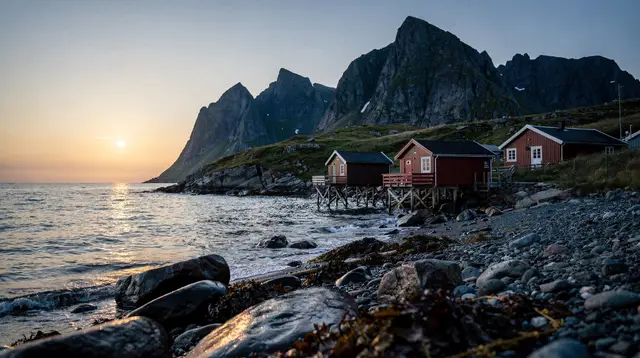
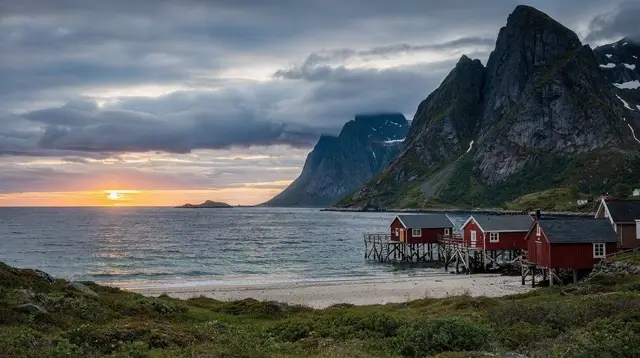
The phenomenon that defines Lofoten summer more than any other is the midnight sun, which runs roughly from 26 May to 17 July — during that window, the sun doesn’t set at all, staying above the horizon around the clock. Outside those dates, on either side, days are still extraordinarily long, just with an actual, if brief, dip below the horizon and a real if short twilight rather than continuous daylight.
Practically, this changes how a day here works. There’s no hard cutoff pushing you indoors at a normal “evening,” and a boat trip, a hike, or a fjord kayak outing at 10pm can look and feel like mid-afternoon. That’s a genuine asset for photography and for simply not feeling time-pressured during a trip, and it’s also disorienting for sleep if you’re not prepared for it — blackout curtains or an eye mask are a small, worthwhile addition to a summer packing list. Some travelers adjust within a day or two; others find their sleep noticeably lighter for the whole trip, and it’s worth planning for that possibility rather than assuming the body simply won’t notice a sun that never sets. Building in a slower morning after a late boat trip or a long evening walk is a reasonable way to absorb that disruption rather than fighting it with a tightly timed itinerary.
For the deeper dive into the mechanics and best ways to experience it, see the midnight sun guide, and for a direct read on the emotional strangeness of a sun that doesn’t go down, the night that never comes covers that side of it.
One of the more distinctive ways to use the light is on the water at an hour that would otherwise be “late”:
a guided kayak paddle on Reinefjord timed around the midnight sun, out on the water at an hour that would be dark almost anywhere elseCrowds: The Part Photos Don’t Show
Summer, and July especially, is the busiest and most expensive stretch of the year across the archipelago, and it’s worth being honest about what that means on the ground. The handful of villages that show up constantly in photographs — Reine, Hamnøy, and Henningsvær chief among them — see real pressure on parking, on the narrow roads leading in and out, and on the handful of viewpoints everyone is trying to reach at the same golden-hour window. Accommodation across the region, and rental cars especially, book out well in advance for peak weeks; this is not a destination where showing up in mid-July without reservations is a safe bet.
None of that means summer isn’t worth it — it plainly is, for the daylight and mild conditions alone — but it changes how to plan. Book lodging and a car early, expect to share the best-known viewpoints with other visitors, and consider timing the most photographed stops for early morning if a comparatively quieter moment matters to you, since the light is available around the clock either way. The pressure this creates on small villages is a real, ongoing conversation here — see overtourism in Lofoten for more on how that plays out at ground level, and where to stay in Lofoten for basing yourself somewhere that absorbs the crowding better than the single most photographed harbor does.
Mosquitoes: The Unglamorous Practical Fact
It rarely makes the postcards, but summer in this part of Norway comes with mosquitoes, and they’re worth planning for rather than being surprised by. They tend to be worse inland and near still or slow-moving water, in calmer, more sheltered conditions — the kind of spot you might choose to sit and enjoy the long evening light. The open, wind-exposed coastline generally fares better, since mosquitoes are far less active in wind, which is one small silver lining to a coastline that rarely sits still. A basic repellent and, if you’re camping or spending long evenings outdoors inland, some covering clothing are worth including on a summer packing list — a minor line item, but one plenty of first-time visitors don’t think to bring.
What’s Actually Open in Summer
Summer is the season this region runs at full capacity, which flips the usual “what’s closed” question most travelers ask about a destination. Museums, guided boat and kayak trips, hiking- adjacent services, and the fuller range of seasonal attractions generally operate their widest schedules of the year during summer, in contrast to the reduced hours and closures more common in the depths of winter. That includes places like the reconstructed Viking longhouse at the Lofotr Viking Museum and the preserved fishing village at Nusfjord, both of which see their busiest and most fully staffed months during summer.
The practical takeaway isn’t “everything is open” as a blanket promise — specific hours and seasonal arrangements vary by operator and should be checked directly rather than assumed — but summer is unambiguously the season with the fewest access restrictions and the widest choice of guided activities running.
Summer-Specific Things to Do
A handful of activities line up especially well with summer’s long light and milder water temperatures, distinct from what’s realistic in winter:
- Kayaking the fjords, especially around Reine, where paddling at an hour that would be dark elsewhere is one of the more distinctive summer-only experiences. See the kayaking guide and Reinefjord kayak guide for the range of options.
- Beach time, genuinely — the sand at Haukland and Uttakleiv looks tropical in photographs even though the water stays cold; see the best beaches guide and beach-hopping on Vestvågøy for the full list.
- Boat trips and sea eagle safaris, with calmer average sea conditions than winter makes for a steadier ride, and long evening light for the kind of cruise timed around sunset colors even though the sun barely dips:
- Snorkeling, a genuinely summer-only activity here given the water temperature, including family-friendly options for travelers with kids in tow:
None of these summer-specific activities require booking months out the way accommodation sometimes does, but the popular sunset and midnight-sun-timed departures are the exception — those slots fill first precisely because the light they’re built around only lasts for a specific stretch of the year.
For the full range of on-water and shore activities across the season, food in Lofoten and the things-to-do beaches category round out what summer specifically opens up.
Summer vs. the Rest of the Year, at a Glance
| Factor | Summer (Jun–Aug) | Rest of the year |
|---|---|---|
| Daytime temperature | Roughly 12 to 17°C | Colder, down to roughly 0 to −3°C in winter |
| Daylight | Midnight sun (late May–mid July); very long days either side | Shortening fast in autumn; polar night roughly 6 Dec–6 Jan |
| Crowds | Heaviest of the year, especially July | Markedly quieter, particularly outside school holiday weeks |
| Mosquitoes | Present inland/near still water; less on windy coast | Not a factor |
| What’s running | Widest range of open attractions and tours | More seasonal closures and reduced hours, especially deep winter |
Budgeting for a Summer Trip
Lofoten is a genuinely expensive destination, and summer’s demand pushes that further — expect accommodation and rental cars to sit toward the higher end of what’s available, and to need booking well ahead. As a rough per-person daily range across accommodation, food, and activities: budget travelers can expect somewhere around 980 NOK, mid-range travelers closer to 3,190 NOK, and higher-end travel around 7,500 NOK, with roughly 11.2 NOK to the euro at time of writing. Summer demand tends to push actual costs toward the upper end of whichever bracket you’re in rather than the lower one. See what a Lofoten trip costs and Lofoten on a budget for the fuller breakdown, including where summer specifically adds pressure to prices.
Planning a Summer Trip
If summer’s mild temperatures, long light, and full calendar of open attractions is the draw, the summer midnight sun itinerary is built specifically around this window rather than adapted from a winter-focused plan. Booking early — accommodation, car rental, and any guided activity you know you want — matters more in this season than any other, precisely because so much of the region is running at capacity simultaneously. A slower, more photography-oriented pace also suits the season particularly well, given how much usable light is on offer at any hour:
an evening boat outing built around the midnight sun itself, with food and drinks included for a slower-paced night on the waterThe Honest Summary
Summer in Lofoten delivers on the light and the mild weather, genuinely — this is the easiest season to travel here in terms of temperature, access, and the sheer range of things open and running. What it doesn’t deliver is solitude or bargain prices: expect company at the famous viewpoints, expect to book ahead, and expect the occasional mosquito if you linger somewhere calm and inland. None of that undercuts the season’s appeal; it just means the postcard and the practical reality are two different documents, and this one is the second.
Frequently Asked Questions About Summer in Lofoten
How warm does it get in Lofoten in summer?
Typically 12 to 17°C during the day, moderated by the Gulf Stream. It rarely gets hot by most travelers’ standards, and a cool, windy, or rainy day is entirely possible even in the middle of July.
When exactly is the midnight sun in Lofoten?
Roughly from 26 May to 17 July, the sun stays above the horizon around the clock. Outside that window, days are still very long, just with an actual sunset and twilight rather than continuous daylight.
Is Lofoten crowded in summer?
Yes, July especially. Popular villages, viewpoints, and parking areas — particularly around Reine, Hamnøy, and Henningsvær — see real pressure in peak season, and accommodation and rental cars book up well ahead of time.
Are there mosquitoes in Lofoten in summer?
Yes, particularly inland and near still water, in calmer conditions. The open, windy coastline tends to be less affected, since mosquitoes are less active in wind, but repellent is still worth packing for a summer trip.
Is everything open in Lofoten during summer?
Summer is when the region runs at full capacity — most museums, guided tours, and seasonal attractions operate their fullest schedules of the year. It’s the opposite problem of winter: less about things being closed and more about everything being busier and pricier.
Is summer or winter better for a first Lofoten trip?
Summer is generally the more forgiving choice for a first visit — milder weather, long daylight, and the widest range of open attractions and tours — while winter trades that ease for aurora chances and a much quieter landscape.
What should I pack for a Lofoten summer trip?
Layers rather than heavy warm clothing: a light insulating layer, a genuinely waterproof and windproof shell, and sturdy footwear. Warm-weather clothes alone are a mismatch for a place where 17°C is close to the ceiling and wind and rain arrive with little warning.
Midnight sun experiences on GetYourGuide
Verified deep-linked GetYourGuide tours. Book through these links and we earn a small commission at no cost to you.
Photos show the destination, not the operator's own images.